
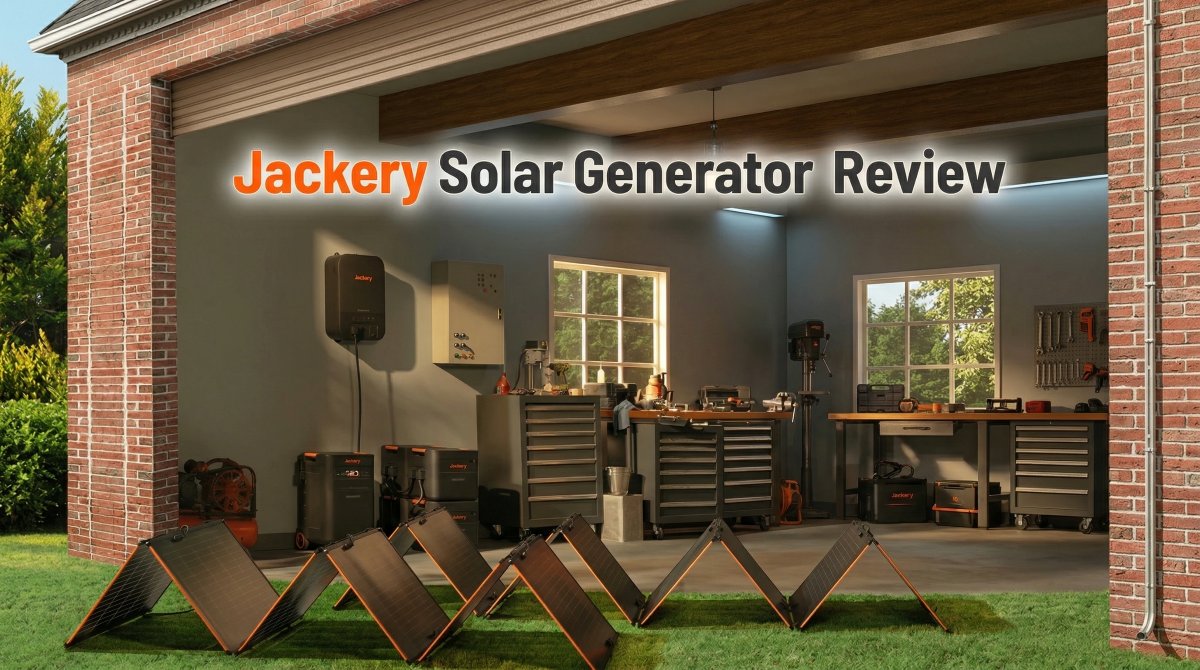
Last Updated: March 2026
Jackery has built quite the name in the world of portable power solutions. Known for reliability, this brand has been sparking interest since its founding in 2012. Over the years, Jackery has become synonymous with quality—especially for those of us who value having dependable power during outdoor trips or when the lights go out at home.
When thinking about setting ourselves free from the grid, the importance of energy independence can’t be overstated. These days, a secure power supply feels less like a luxury and more like a necessity. Whether you’re camping in the wild, charging devices on a long road trip, or keeping essentials running during an outage, having a reliable solar generator can make all the difference.
I’ve personally spent time looking into how these systems perform in real-world situations—not just specs on paper, but how they actually hold up when you need them most. (You can see a deeper breakdown in Off-Grid Power Testing: Jackery Solar Generators.)
Enter Jackery Solar Generators. Units like the Explorer series offer a strong balance of power, portability, and simplicity. But is it really “simply the best,” or just another well-marketed product?
Let’s break it down.
Is the Jackery Solar Generator Worth It?
If you’re looking for a reliable, expandable, and beginner-friendly solar generator, the Jackery Explorer 2000 Plus is absolutely worth considering.
In my experience, Jackery stands out for its simplicity, portability, and ability to grow with your needs. It’s not the cheapest option upfront, and it’s not designed to run an entire home, but for emergency preparedness, camping, and essential backup power, it does exactly what most people need it to do.
If your goal is to keep your refrigerator running, charge devices, power lights, or even support small appliances during an outage, this system delivers dependable performance without unnecessary complexity.
That said, if you need whole-home backup or 240V output without pairing units, there may be better options—but for most families focused on preparedness, Jackery hits a very practical sweet spot.
Jackery Solar Generators At a Glance
Here’s a quick breakdown of what you can expect from Jackery’s solar generator lineup:
- Portable, all-in-one power stations
- Expandable battery systems (depending on model)
- Multiple charging options (wall, solar, vehicle)
- Designed for ease of use (plug-and-play setup)
- Reliable output for essential devices and appliances
- Options ranging from portable backup to near whole-home systems
One thing I appreciate about Jackery is that you’re not locked into a single level. You can start with something practical and scale up over time as your needs grow.
For most families, something in the Explorer range (like the 2000 Plus) covers the essentials. But for those looking for serious backup power—longer runtimes, higher output, and the ability to support more of your home—Jackery also offers larger systems like the 5000 Plus.
That’s where things start moving from “backup power” into “prepared for just about anything.”
Who This Jackery Solar Generator Is For
This system makes the most sense if you’re someone who wants to be prepared without overcomplicating things.
It’s a great fit for:
- Families preparing for power outages
- Anyone wanting a reliable backup for essentials like a fridge, lights, and phones
- Campers and travelers who need portable power
- People beginning their preparedness journey
- Those looking for a solar-compatible system they can expand over time
I’ve seen firsthand how having something like this changes the tone during an outage—it shifts things from panic to peace. If you’ve read Peace in the Storm: How Faith, Preparation, and Community Carried Us Through the Winter Storm of 2026, you already understand how important that is.
Who Should Probably Skip This
This may not be the best fit if:
- You need full-home backup power
- You require 240V output without pairing units
- You’re running heavy-duty equipment regularly
- You want the absolute lowest cost per watt available
If you’re looking for something closer to whole-home backup, this is where larger systems like the 5000 Plus start to make more sense. Those are designed for higher output, longer runtimes, and more demanding situations.
At the end of the day, it comes down to stewardship—using wisdom in how we prepare. As I talk about in Why Spiritual Prepping Matters More Than Stockpiling, it’s not about fear, it’s about being ready so you can stand firm and even help others when the time comes.
When You Might Want Something Bigger Than the Explorer Series
For many households, a portable system like the Explorer line is more than enough to get through outages and keep essentials running.
But there are situations where you may want to step up to something more powerful.
If you’re thinking about:
- Running multiple large appliances at once
- Extending backup power for days instead of hours
- Supporting more of your home during outages
- Moving toward a more complete off-grid setup
…then a larger system like the Jackery 5000 Plus starts to make a lot more sense.
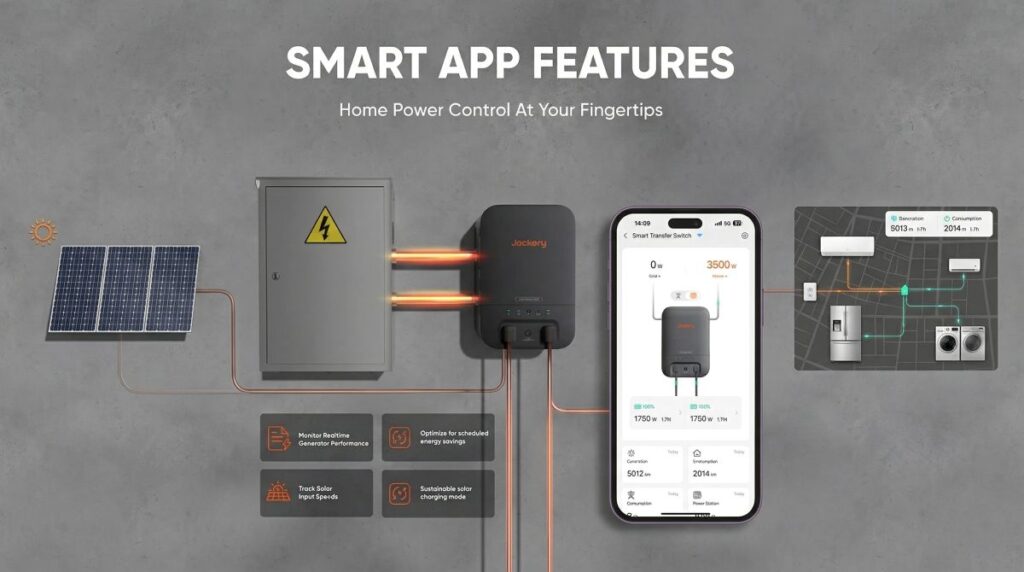
With significantly higher capacity, stronger output, and options like a smart transfer switch, these systems are built for people who want a more complete home backup solution—not just a portable power station.
It’s not for everyone—but if you’re the type who would rather be over-prepared than under-prepared, this is where Jackery really starts to shine.
Jackery’s Approach to Modularity and Expandability
When it comes to portable power, one aspect that really stands out with Jackery is their approach to modularity and expandability. This isn’t just a buzzword—it’s about flexibility, and that matters more than most people realize when you’re thinking long-term.
With systems like the Explorer series, you’re not locked into a fixed setup. You can start with a base unit and expand your capacity over time by adding additional battery packs. That means you don’t have to go all-in upfront, and you’re not forced to replace your entire system as your needs grow.
Think of it like building in layers. Maybe today you just want enough power to keep essentials running during an outage. But down the road, you may want to support more devices, extend runtime, or even move toward a more off-grid lifestyle. Jackery gives you that option without starting from scratch.
From a preparedness standpoint, this is a big deal. It allows you to build your system at your own pace, based on your situation and your budget. You’re not just buying a product—you’re building a system that can grow with you.
And if you find yourself needing something beyond portable backup—something closer to a home-level solution—that’s where stepping up to larger systems like the 5000 Plus starts to make sense. Those are designed with higher output, longer runtimes, and more demanding use cases in mind.
At the end of the day, this kind of flexibility isn’t just convenient—it’s wise. It gives you the ability to adapt, and in uncertain times, adaptability matters.
Affiliate Disclosure
This post may contain affiliate links. If you make a purchase through one of these links, the site may earn a small commission at no extra cost to you. We only recommend resources we believe provide real value and align with the purpose of this site.
Features: The Good
Alright, let’s talk about why the Jackery Explorer series—especially units like the 2000 Plus—gets so much attention. On paper, the specs look solid. But what really matters is how it performs when you actually need it.
One of the first things that stands out is portability. At around 60 pounds, it’s not exactly light, but Jackery made it practical with built-in wheels and a telescoping handle. You’re not carrying this thing—you’re rolling it. Whether it’s moving it around the house during an outage or loading it up for a trip, that makes a big difference.
Another major advantage is expandability. You’re not stuck with a fixed amount of power. You can start with a base unit and add battery packs over time, turning it from a simple backup into a much more capable system. That kind of flexibility fits perfectly with a preparedness mindset—you build as you go, instead of trying to solve everything all at once.
Solar compatibility is where this really starts to shine. Being able to recharge using solar panels means you’re not just relying on the grid. In a short outage, that may not matter much—but in an extended situation, it becomes everything. As long as the sun is out, you have a path to keep essential devices running.
From a performance standpoint, Jackery has built a reputation for consistency. It’s not flashy, but it works. When you plug something in, it powers on. No surprises, no complicated setup, no learning curve. That’s something a lot of people overlook until they actually need it.
And from a real-world perspective, this is where systems like this earn their value. Keeping a refrigerator running, charging phones, powering lights, maybe even running a small heater or medical device—these are the situations that matter. It’s not about powering everything. It’s about powering what matters most.
If you’ve ever been through an outage, you know the difference that makes. It’s not just convenience—it’s peace of mind. And in many ways, that’s what this kind of system is really providing.
Pricing and Value Proposition
When you’re making a decision about purchasing a power station, cost is usually a major factor. So let’s break down how Jackery positions itself here.
They follow a fairly straightforward pricing model—roughly around $1 per watt-hour for their core units. For something like the Explorer 2000 Plus, you’re typically looking at around $2,000 for about 2,000Wh of capacity. That puts it right in line with other high-quality portable power stations on the market.
But where Jackery really starts to separate itself is in the expansion side of things.
When you begin adding extra battery packs, the cost per watt-hour actually drops. In many cases, expansion batteries come in significantly cheaper than the base unit, which makes scaling your system much more affordable over time. That’s not something every brand does, and it can make a big difference if you’re thinking long-term.
In practical terms, you’re not just buying a fixed product—you’re building a system. You can start with what you need today and grow into something much more capable without feeling like you have to start over.
Compared to some competitors that keep pricing high across the board, Jackery offers a more flexible path. You’re able to expand without the same level of financial pressure, which makes it a strong option for people who want to build gradually.
From a preparedness standpoint, that matters.
Most people don’t go from zero to fully prepared overnight. It’s something you build over time. Having a system that allows you to scale at your own pace makes the investment feel more manageable and more realistic.
Now, if you’re someone who already knows you want a higher level of backup—something that can support more of your home, run longer, and handle heavier loads—that’s where stepping up to a system like the 5000 Plus starts to make sense.
Those larger systems come with a higher upfront cost, but they’re built for a different level of use. You’re not just covering essentials anymore—you’re moving toward a more complete backup solution.
At the end of the day, Jackery offers a strong balance between cost, flexibility, and long-term value. Whether you’re starting small or planning for something bigger down the road, it gives you a path forward without locking you into a single level.
Features: Areas for Improvement
Even with all its strengths, the Jackery Explorer series—especially the 2000 Plus—isn’t perfect. And this is the part most reviews either gloss over or barely mention, but it matters if you’re making a serious investment.
One thing to understand right away is that while the unit is powerful, it’s not designed to be a full whole-home solution on its own. If you’re expecting to run everything in your house without limitations, you’re going to run into some frustration. This system is built around powering essentials, not replacing your entire electrical setup.
Another consideration is usable capacity. Like most power stations, you’re not getting 100% of the advertised capacity in real-world use. Some energy is lost through conversion and efficiency. That’s normal across the industry, but it’s something people don’t always account for when planning their usage.
There are also some limitations when it comes to expandability and output. While the system can scale significantly, certain features—like 240V output—require pairing units together rather than being available out of the box. For some users, that’s not a big deal. For others, it adds an extra layer of cost and setup.
From a hardware standpoint, weight is another factor. At just over 60 pounds, this isn’t something you’re casually carrying around. Jackery did a great job adding wheels and a handle, but it’s still something to consider depending on how often you plan to move it.
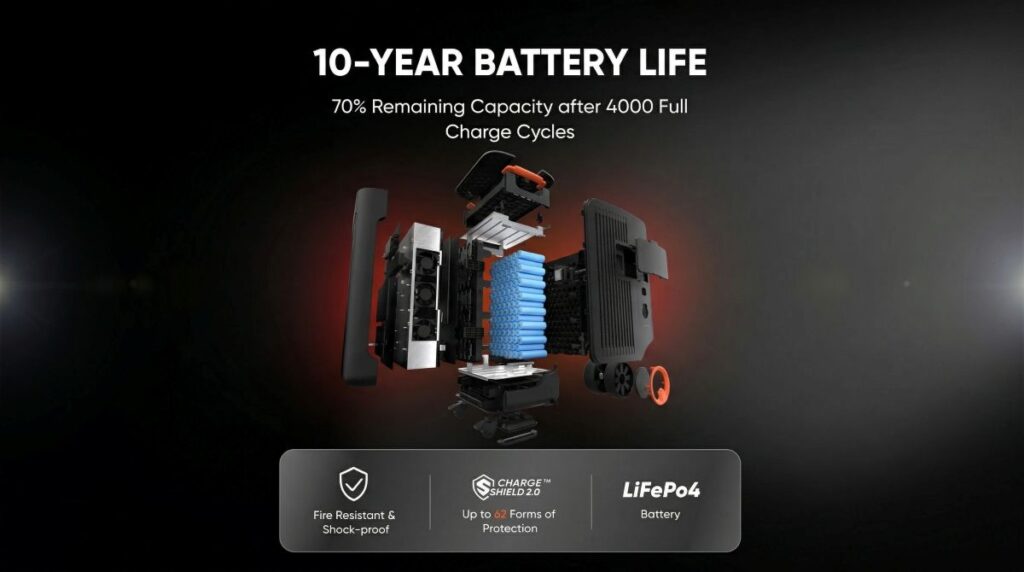
Battery technology is a strong point overall, with newer models using LiFePO4 cells designed for longer lifespan—often rated for thousands of charge cycles and potentially up to a decade of use if properly maintained. But like any battery system, long-term performance still depends on how it’s used and maintained over time.
There are also some smaller limitations that may or may not matter depending on your situation. Things like port configurations, solar input limits, or charging behavior can affect how efficiently you’re able to use the system in real-world conditions.
At the end of the day, none of these are deal-breakers for most people—but they are things you should understand going in.
Because preparedness isn’t just about having equipment—it’s about knowing exactly what that equipment can and can’t do before you actually need it.
User Experience and Practicality
When it comes to actually using the Jackery Explorer series, this is where it really starts to make sense. The focus isn’t on flashy features—it’s on simplicity, reliability, and doing exactly what you expect it to do.
Getting set up is about as straightforward as it gets. It’s essentially plug-and-play. You don’t need to be technical, you don’t need to study a manual for hours, and you’re not troubleshooting complicated settings when the power goes out. You turn it on, plug your devices in, and it works.
That kind of simplicity matters more than people realize—especially in stressful situations.
Mobility is another area where Jackery did a solid job. Even though the unit has some weight to it, the built-in wheels and telescoping handle make it manageable. You can move it where you need it without turning it into a whole project, whether that’s inside your home or out to a campsite.
Where this system really proves its value, though, is in real-life situations.
When the power goes out, you’re not thinking about specs—you’re thinking about keeping food from spoiling, keeping lights on, and staying connected. Being able to plug in your refrigerator, charge your phones, and maintain some sense of normalcy changes everything.
I’ve talked about this in Peace in the Storm: How Faith, Preparation, and Community Carried Us Through the Winter Storm of 2026, and it’s something that sticks with you. Preparation doesn’t eliminate the storm—but it does change how you walk through it.
From a reliability standpoint, Jackery has built a strong reputation for consistent performance. It’s not trying to do too much—it’s focused on doing the basics well. And when you’re relying on something during an outage or off-grid situation, that consistency is what builds trust.
Long-term, users tend to appreciate that this isn’t overloaded with unnecessary features. It’s designed to work, and to keep working. That kind of straightforward approach is exactly what many people are looking for in a power solution.
At the end of the day, this isn’t just about convenience—it’s about having something you can depend on when it actually matters.
Comparison With Competitors
When it comes to portable power stations, Jackery isn’t the only option out there. There are several strong competitors, and knowing how Jackery stacks up can help you make the right decision for your situation.
One of the more commonly compared alternatives is the Anker Solix line. Anker tends to offer more advanced features out of the box—things like built-in 240V output on certain models and higher overall output in a single unit. For someone who wants maximum power right away without expanding, that can be appealing.
But that doesn’t automatically make it the better choice.
Where Jackery really separates itself is in simplicity, portability, and scalability. The system is easy to use, easy to move, and designed to grow with you over time. Instead of forcing you into a large upfront investment, it allows you to build your setup as your needs increase.
From a practical standpoint, that matters.
Not everyone needs the most powerful system on day one. In fact, most people don’t. What they need is something reliable that can handle essential devices during an outage—and then expand from there if needed.
That’s where Jackery fits in extremely well.
Another thing worth considering is usability. Some competing systems come packed with features, but that can also mean a steeper learning curve. Jackery keeps things straightforward. You don’t have to overthink it—you plug it in, and it works.
For many households, that ease of use is a bigger advantage than having every possible feature available.
Now, if your goal is to run high-demand appliances, power larger portions of your home, or replace more of your grid dependency, then looking at higher-output systems—whether from Jackery or competitors—starts to make more sense.
But if your focus is preparedness, flexibility, and dependable performance without unnecessary complexity, Jackery holds its ground very well.
At the end of the day, it comes down to this:
- If you want maximum power immediately → some competitors may have the edge
- If you want a system you can grow into → Jackery is hard to beat
- If you value simplicity and reliability → Jackery stands out
Choosing the right system isn’t about chasing specs—it’s about matching the tool to the situation you’re preparing for.
Final Verdict: Is Jackery Simply the Best?
After taking a close look at what Jackery offers—especially systems like the Explorer series—it’s clear why this brand has built such a strong reputation.
It’s not about flashy features or overcomplicated setups. It’s about reliability, simplicity, and having a system that works when you actually need it.
For most people, that’s exactly what matters.
If your goal is to be prepared—to keep your essentials running during an outage, to stay connected, and to bring a sense of calm into an otherwise stressful situation—Jackery delivers on that in a very practical way.
It’s not designed to power everything, and it’s not trying to be something it’s not. But for what it’s built to do, it does it well.
And for those who want to go further—longer runtimes, more output, more coverage—there are larger systems available that can take things to the next level. The key is choosing the setup that matches your situation, not just chasing the biggest option available.
From a preparedness standpoint, this is really what it comes down to.
It’s not about fear. It’s about being ready.
Being ready so your family is taken care of.
Being ready so you can help others if needed.
That’s something I talk more about in Helping Others in Crisis as a Christian Prepper, and it ties directly into why tools like this matter in the first place.
At the end of the day, Jackery may not be the perfect solution for every situation—but for a large number of people, it’s a dependable, flexible, and realistic step toward being better prepared.
About the Author

Jason T is the founder of Prepared and Redeemed, a website dedicated to helping families grow in both faith and preparedness.
Through real-life experience and hands-on research, Jason shares practical insights on emergency readiness, off-grid living, and tools that can help you stay prepared when it matters most. His approach is rooted in a simple belief: prepare wisely, trust God, and be ready to help others in times of need.
His goal is not just to inform, but to encourage—reminding others that true preparedness starts spiritually, not just physically.
Visit our Trusted Products and Reviews page to learn More!
Suggested Reading
Building A Family Culture Of Faith And Preparedness
Helping Others in Crisis as a Christian Prepper
The Ultimate Guide to Christian Emergency Prepping
Our website contains affiliate links. This means if you click and make a purchase, we may receive a small commission. Don’t worry, there’s no extra cost to you. It’s a simple way you can support our mission to bring you quality content.
This is a great review, Jason. We’ve been looking for some power stations to take camping, and it seems like a Jackery solar generator would be a great option. One thing we were considering, though, is how this might perform in a cold winter setting? We were planning do some winter camping trips in Northern Canada and was considering if going solar was really a wise choice over some sort of fuel-powered motor.
Hey, glad you found the review helpful! Yeah, Jackery makes some solid units for camping. For winter camping up in Northern Canada, solar can be a bit tricky since shorter daylight hours and heavy cloud cover limit how much you can recharge. Cold temps also drain lithium batteries faster, so you’d need to keep the power station somewhat insulated or inside your tent or camper when not in use.
That said, if you’re mainly running lights, phones, or small electronics, it can still work fine as long as you manage power carefully and maybe bring an extra panel. But if you’re thinking heavier loads (like heaters), a fuel-powered option might be the safer bet. Some folks even do a mix, solar for the small essentials and a backup fuel source for when the sun doesn’t show.
What kind of gear are you planning to run off it on those trips?
I’m assuming a heater might be one of them since this is a winter trip.
Nice review, Jason. Your review of the Jackery Solar Generator provides a comprehensive look at its features and benefits. The emphasis on modularity and expandability is particularly appealing for users looking to scale their power needs over time. The portability and compatibility with solar panels make it an awesome choice for both outdoor adventures and emergency home backup.
How does the Jackery Solar Generator compare to other brands in terms of long-term durability and warranty support? Are there any common issues users should be aware of?
Thanks for the thoughtful comment! From what I’ve seen, Jackery holds up pretty well over time compared to a lot of the other portable power brands. Their warranty is solid (usually 2 years, and you can extend it if you register), and most users say customer support is responsive if something does come up. The main thing to keep in mind is that, like most lithium batteries, performance can dip if it’s stored in extreme heat or cold for long stretches. A few people have mentioned fan noise under heavy load, but overall, durability and reliability seem to be what keeps Jackery ahead of a lot of the cheaper competitors.
We are looking for a good solar system, and I hadn’t heard of Jackery before. I was glad to see that Jackery portable power stations and solar panels are available in our country and actually since 2020.
They promise to offer various portable power solutions for camping, road trips, and loadshedding, with products available through the official Jackery website, as well as retailers like Outdoor Warehouse, Cape Union Mart, and Orms Direct. Thank you for this, and I will definitely explore this brand further for our house. The good thing is that we live in a city with loads of sun.
Michel, I really appreciate you sharing that—and it sounds like you’re in a great position to take advantage of solar, especially with the amount of sun you’re getting.
That’s actually one of the things that makes systems like Jackery so practical. You don’t have to go all-in right away. You can start with a solid base unit and then build it out over time as your needs grow. For a lot of people dealing with regular outages or load shedding, that kind of flexibility makes a big difference.
And you’re right—having access locally through retailers is a big plus. It gives you options for support, pricing, and availability instead of relying on one source.
If you’re mainly looking to cover essentials—things like keeping food from spoiling, charging devices, and maintaining some normalcy during outages—Jackery does a really good job in that space. And with the amount of sunlight you have, you’re in an ideal setup to actually keep it going day after day.
That’s really where these systems shine—not just backup power, but a level of independence.
If you end up moving forward with one, I’d be interested to hear what setup you go with and how it works out for your situation.
Stay prepared, and thanks again for stopping by.
I liked that you focused on real-life usability instead of making it sound like a miracle product. That’s what most people actually need when deciding on something this expensive. I’d be interested to know whether you think this setup makes more sense for short-term outages or for people who want a more serious off-grid backup plan.
That’s a great question, and you’re looking at it the right way.
Most reviews try to force this into a simple category like “backup” or “off-grid,” but that’s not how these systems actually work in the real world.
With something like the Jackery 5000, you’re not buying a fixed solution—you’re buying a scalable system.
Out of the box, it’s clearly built for outages.
But once you start expanding it, everything changes:
The system can scale up to 60kWh of storage, which moves it well beyond basic backup
It can integrate with a transfer switch to run multiple home circuits
It can handle large appliances with 7200W output and 240V capability
At that point, the real question isn’t whether it’s “short-term” or “off-grid.”
It becomes:
What are you trying to power—and how long can you sustain it?
Because like any solar setup:
More battery = more runtime
More solar input = more sustainability
More load = faster drain
That’s just physics, not branding.
So the honest answer is:
It’s excellent for short-term outages by default.
But with the right setup, it can absolutely move into serious home backup or even off-grid territory—as long as expectations match the system.
That’s the nuance most reviews skip.
This is a well-balanced and practical review that clearly outlines where Jackery excels and where its limitations lie. I appreciate the emphasis on real-world usability, especially around reliability, ease of use, and scalability key factors for most households. Your comparison with competitors and focus on matching the system to actual needs adds strong decision-making value. Overall, it offers a grounded perspective that helps readers approach portable power with clarity rather than hype.
Kavitha, I really appreciate this, thank you.
That balance you mentioned is exactly what I aim for, especially with something like portable power. It’s easy to get caught up in specs and marketing, but what really matters is how these systems perform in real-life situations—when you actually need them.
Jackery does a lot of things very well, particularly with ease of use and reliability. That’s why I lean toward recommending it for most households, especially those just getting started. But like you pointed out, it’s not perfect, and understanding those limitations upfront helps people avoid overspending or expecting more than the system can realistically deliver.
The scalability piece is huge too. A lot of people don’t realize they can start small and build over time, instead of trying to solve everything in one purchase. That shift alone tends to reduce a lot of stress and confusion.
I’m glad the comparisons helped bring clarity. At the end of the day, it’s not about picking a “winner”, it’s about choosing what actually fits your situation.