Not reform. Not education. Not law, ritual, or religious effort. Not morality, good intentions, or human progress.
From the beginning, Scripture makes one thing clear: sin created a separation between a holy God and fallen mankind that could not be repaired by human hands. No amount of effort could undo rebellion. No sacrifice offered by man could erase guilt. And no system of laws could change the human heart.
Justice demanded payment. Mercy demanded redemption. And love demanded a sacrifice great enough to satisfy them both.
So God did what only God could do.
He did not abandon His creation. He did not lower His standard. He did not compromise His holiness.
He entered the world Himself.
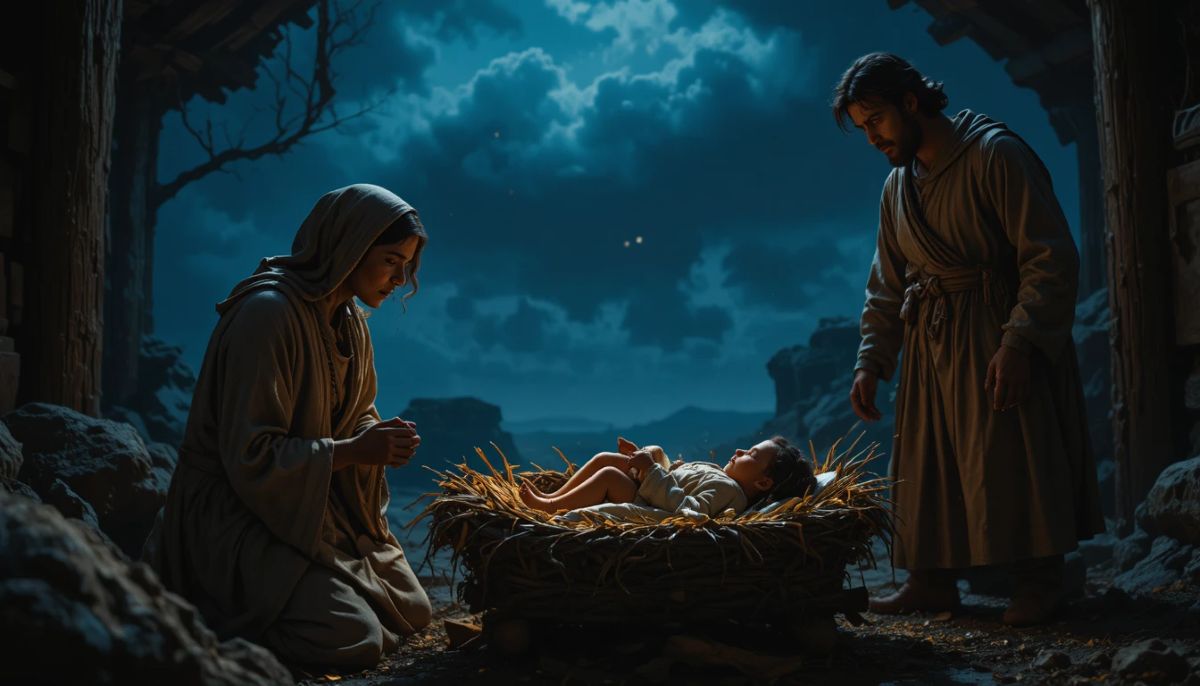
The birth of Jesus Christ was not an afterthought, a reaction, or a divine contingency plan. It was the fulfillment of God’s eternal purpose. Before the foundations of the world were laid, the Lamb was already chosen. Long before a manger was prepared in Bethlehem, the cross was already in view.
Christmas was not improvisation. It was precision.
This is the miracle we celebrate — not merely that a child was born, but that God took on flesh. The Creator stepped into His creation. The Eternal entered time. The Holy One wrapped Himself in human weakness so that humanity could be restored.
“For God so loved the world that He gave His one and only Son, that whoever believes in Him shall not perish but have everlasting life.”
God did not send an angel to negotiate peace. He did not send a prophet to offer more instruction. He did not send a king to enforce obedience.
He sent His Son.
Jesus was born because there was no other option. Humanity could not climb its way back to God. The debt of sin was infinite, and only an infinite sacrifice could pay it. Only God Himself could bear the cost of redemption.
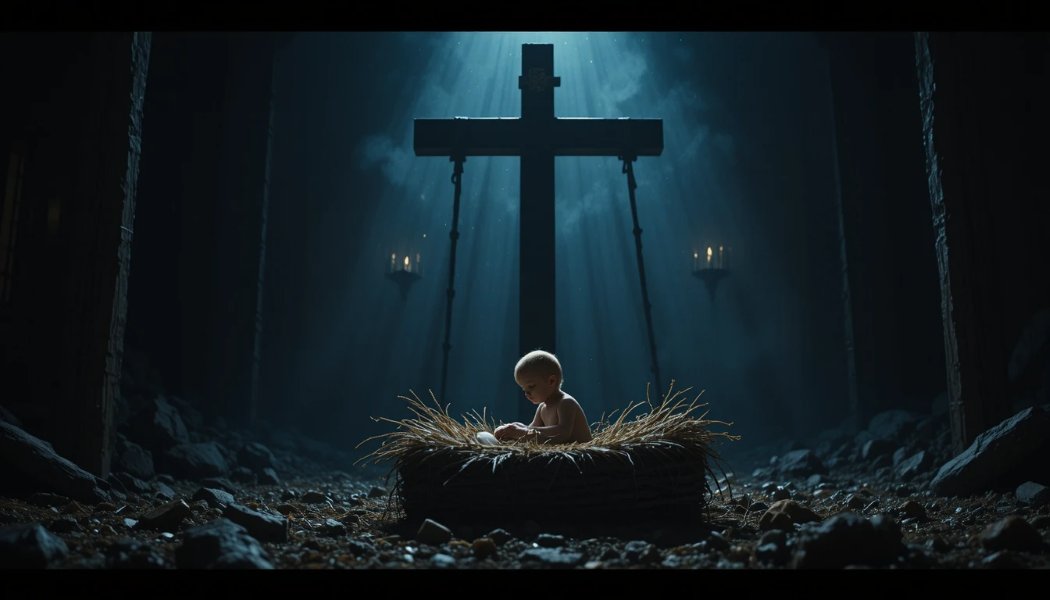
The manger was not incidental. It was intentional.
The humility of Christ’s birth points directly to the suffering of His death. He came not to be admired, but to be rejected. Not to be celebrated by the powerful, but to be despised by the proud. And not to save Himself, but to save those who could not save themselves.
The child born in Bethlehem did not come to make life easier — He came to make salvation possible.
As Christmas approaches, the world fills with lights, traditions, and familiar songs. There is comfort in the season, and beauty in the celebration. But Scripture calls us to see beyond nostalgia and sentiment.
The birth of Jesus is glorious not because it feels peaceful — but because it was costly.
God gave what He loved most so that we might live.
The incarnation tells us something staggering about the heart of God: He did not wait for humanity to improve. He did not demand worthiness before offering grace. He moved toward us while we were still lost.
This is not symbolic love. It is sacrificial love.
And the miracle of Christ’s birth is not only that God came near — it is that He came knowing exactly what it would cost Him.
Why Jesus Came: Love for Sinners, Not the Righteous
One of the greatest misunderstandings about Jesus is who He came for.
Many assume Christ came to reward good people, affirm the morally upright, or improve those already trying their best. But Jesus made it unmistakably clear — His mission was not aimed at the self-sufficient.
It was aimed at the sick.
When religious leaders criticized Him for associating with sinners, Jesus responded with words that still confront human pride today:
“Those who are well have no need of a physician, but those who are sick. I have not come to call the righteous, but sinners to repentance.” — Luke 5:31–32
This was not sarcasm. It was diagnosis.
Jesus was not denying the existence of sin among the “righteous.” He was exposing the danger of believing you don’t need saving. The spiritually blind often don’t seek a doctor — not because they are healthy, but because they refuse to admit they are sick.
Christ came for those who know they are broken.
From the beginning, His ministry gravitated toward the outcasts, the failures, the addicted, the immoral, and the rejected. He did not wait for repentance before extending compassion — but His compassion always called people out of sin, not deeper into it.
Scripture captures this tension beautifully:
“But God shows His love for us in that while we were still sinners, Christ died for us.” — Romans 5:8
Jesus did not die for a cleaned-up version of humanity. He died for us as we were.
This truth dismantles pride and rescues hope at the same time. It tells the self-righteous that morality cannot save them — and it tells the broken that their mess does not disqualify them.
The Gospel is offensive to both extremes.
To the religious, it says: Your good works are not enough. To the sinner, it says: Your worst failures are not too much.
This is why Jesus’ message still divides hearts today. Those who believe they are spiritually healthy often reject Him. Those who recognize their sickness often cling to Him desperately.
And this is why spiritual preparedness matters more than stockpiling. No amount of physical readiness can heal a soul that refuses to acknowledge its need for redemption. Preparedness of the body without repentance of the heart leaves eternity untouched.
Jesus did not come to make bad people feel better about themselves. He came to make dead people alive.
“For the Son of Man came to seek and to save the lost.” — Luke 19:10
That includes the obvious sinner — and the quiet one. The addict — and the respectable. The rebel — and the rule-keeper.
If you are reading this and feel unworthy, exhausted, or aware of your own failures, that awareness is not a curse — it is often the first sign of healing. Sick people go to the doctor because they know something is wrong.
Jesus is not repelled by your brokenness. He came because of it.
The Cross Was Always the Destination
The birth of Jesus cannot be understood apart from the cross.
From the moment Christ entered the world, His life was moving in one direction. The manger did not stand alone — it pointed forward. The humility of His birth was inseparable from the suffering of His death.
Jesus was not born simply to teach, to inspire, or to model kindness. He was born to die.
This truth is uncomfortable, but it is essential.
Scripture makes it clear that forgiveness is not achieved through sentiment or intention. Sin demands payment, and justice requires blood.
“Without the shedding of blood there is no forgiveness of sins.” — Hebrews 9:22
From the very beginning, God established this reality. Sacrificial systems were never meant to save — they were meant to point. Every lamb, every offering, every altar was a shadow of what was coming.
Jesus was the substance.
“Behold, the Lamb of God, who takes away the sin of the world!” — John 1:29
The cross was not a tragic interruption of Christ’s mission. It was the mission.
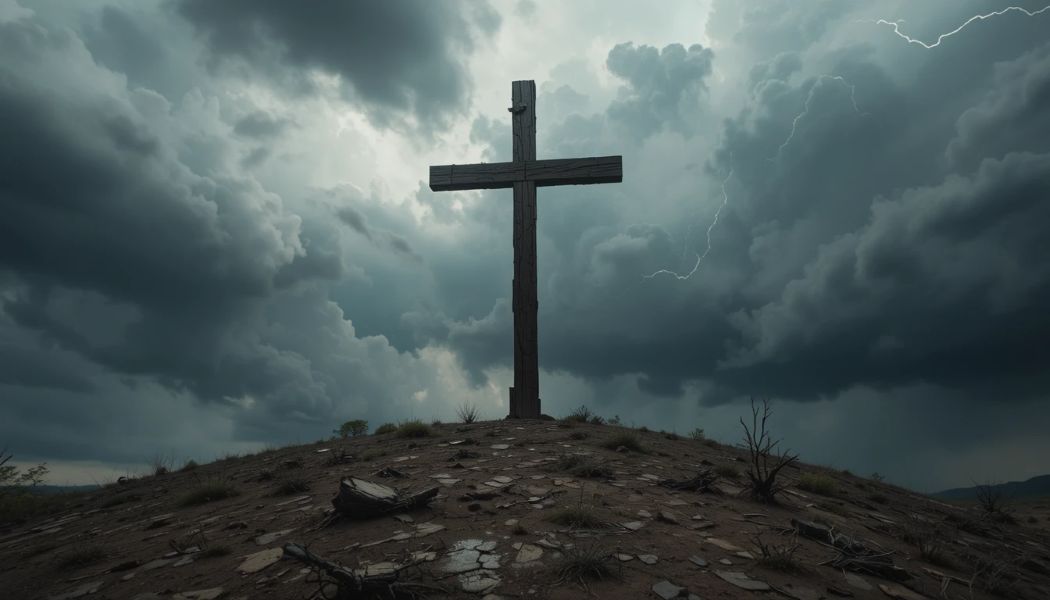
On that hill outside Jerusalem, Jesus bore the full weight of human sin — not abstractly, but personally. Every act of rebellion, every hidden thought, every unspoken failure was laid upon Him.
“He Himself bore our sins in His body on the tree.” — 1 Peter 2:24
This was not symbolic suffering. It was substitution.
Christ stood in our place. He absorbed the wrath we deserved. And for the first time in eternity, the Son experienced separation from the Father so that we would never have to.
The cross reveals both the seriousness of sin and the depth of God’s love. If forgiveness could have been achieved any other way, the cross would not have been necessary.
But there was no other way.
And even in the midst of unimaginable agony, Jesus revealed the heart of God:
“Father, forgive them, for they know not what they do.” — Luke 23:34
These words were not spoken after the pain had passed. They were spoken while nails still held Him to the wood.
This is why forgiveness is not optional for the believer. If Christ could extend mercy while being crucified, we are called to forgive even when the world grows darker, colder, and more hostile. This truth becomes especially critical as chaos increases — a theme explored more deeply in The Power of Forgiveness During End Times Chaos.
The cross confronts us with an unavoidable reality: grace is free to us, but it was not cheap to God.
Jesus did not escape suffering. He embraced it.
And He did so willingly.
“For the joy that was set before Him, He endured the cross.” — Hebrews 12:2
That joy was not comfort. It was redemption.
It was you.
The cross stands as the dividing line of history. It exposes the lie that sin is small, while proclaiming the truth that God’s love is greater. It tells us that salvation is not earned, not deserved, and not negotiable.
It is received — or rejected.
And this is why the birth of Jesus matters so deeply now. The child born in Bethlehem grew into the man who carried a cross. The Savior who came in humility secured redemption through suffering.
The cross was always the destination.
The Battle Within: Temptation, the Flesh, and God’s Faithfulness
Salvation does not remove struggle.
That truth alone has caused many believers to doubt their faith, question their salvation, or quietly drift away in shame. Somewhere along the way, the lie crept in that once we come to Christ, temptation should disappear — and when it doesn’t, something must be wrong with us.
Scripture says otherwise.
The battle with temptation is not evidence of a false faith. It is evidence that a war is being fought.
The enemy does not need to tempt what already belongs to him. Temptation intensifies precisely because redemption has taken place. The flesh resists the Spirit, and the Spirit resists the flesh — and that tension does not end until glory.
The apostle Paul spoke about this struggle with painful honesty:
“For I do not understand my own actions. For I do not do what I want, but I do the very thing I hate.” — Romans 7:15
Jesus Set Us Free
This is not the confession of an unbeliever. It is the confession of a redeemed man who understands the depth of the conflict within.
Paul goes on to describe a war between the desires of the flesh and the desire to obey God — a war many believers know all too well. We can recognize truth, love righteousness, and still find ourselves pulled toward sin.
For many of us, the hardest truth to admit is this: our greatest enemy is often not the world, or even the devil alone — it is ourselves.
We know what is right. We know the way out. And yet there are moments when we choose the desires of the flesh anyway.
Scripture does not excuse this reality — but it does not leave us without hope.
“No temptation has overtaken you that is not common to man. God is faithful, and He will not let you be tempted beyond your ability, but with the temptation He will also provide the way of escape, that you may be able to endure it.” — 1 Corinthians 10:13
This verse does not promise an easy escape. It promises a faithful God.
Temptation itself is not sin. Jesus was tempted in every way, yet without sin. The danger lies not in being tempted, but in believing there is no way out — or that failure defines us.
God always provides an escape. Sometimes it is strength. Sometimes it is distance. Sometimes it is conviction. Sometimes it is the quiet voice that says, “Stop.”
The tragedy is not that temptation comes — it is that we sometimes ignore the exit God has already provided.
And yet, even when we fail, grace does not vanish.
Conviction is not condemnation. Repentance is not rejection. Grace is not exhausted by weakness.
Paul, after laying bare his internal struggle, did not end in despair. He pointed to the only true source of hope:
“Thanks be to God through Jesus Christ our Lord!” — Romans 7:25
The answer to temptation is not willpower alone. It is dependence.
This is why fear must never be the motivator of faith. Fear produces hiding. Fear produces performance. Fear produces despair. Faith, on the other hand, produces repentance, humility, and perseverance — themes explored more deeply in Faith Over Fear in Times of Crisis.
The Gospel does not tell us that believers will never fall. It tells us that when we do, we are not abandoned.
“For though the righteous fall seven times, they rise again.” — Proverbs 24:16
This is the quiet power of the cross. Christ did not only die to forgive past sins — He died to carry us through ongoing weakness. Temptation may persist, but it does not have the final word.
God’s faithfulness does.
Deception in the Last Days: When Truth Is Rejected and Evil Is Celebrated
The world has not simply changed — it has turned upside down.
What was once recognized as evil is now defended, celebrated, and protected. What was once called good is mocked, silenced, or punished. Truth is no longer debated — it is cancelled. And those who speak it are increasingly treated as the problem.
Scripture warned us this would happen.
“Woe to those who call evil good and good evil, who put darkness for light and light for darkness.” — Isaiah 5:20
This moral inversion is not accidental. It is not merely cultural drift or political disagreement. It is spiritual deception, unfolding exactly as God’s Word said it would.
One of the clearest signs of this deception is the shedding of innocent blood. Entire generations of unborn children have been lost — lives created in God’s image, erased before they ever drew breath. Scripture is clear that God sees this, and He does not overlook it.
“Surely I will require the blood of your lives.” — Genesis 9:5
Another sign is the normalization of confusion. God created male and female with intention and purpose, yet that design is now openly rejected. Biological reality is treated as oppression. Children are encouraged to question their identity before they are old enough to understand consequence. What Scripture calls order is labeled hate, and what Scripture calls sin is glorified.
“For this reason God gave them up to dishonorable passions.” — Romans 1:26
Violence, chaos, and lawlessness have also become increasingly justified through emotionally charged language, slogans, and narratives that stir anger and division. Words are weaponized. Groups are dehumanized. And once truth is abandoned, restraint disappears.
Jesus warned that deception would not merely increase — it would intensify.
“False Christ’s and false prophets will arise and perform great signs and wonders, so as to lead astray, if possible, even the elect.” — Matthew 24:24
This is why discernment is no longer optional for believers. We are living in an age where information is constant, emotion is manipulated, and lies are repeated until they feel true. The enemy does not always attack openly — more often, he confuses, distorts, and normalizes sin until conscience grows dull.
Scripture tells us exactly why this is happening:
“The god of this world has blinded the minds of the unbelievers.” (Satan) — 2 Corinthians 4:4
The enemy knows his time is short.
He already knows his eternity is sealed — but yours is not.
That is why deception is accelerating. That is why confusion is celebrated. That is why truth is attacked so aggressively. The goal is not merely to control culture, but to pull souls away from repentance.
This reality is explored in depth in Living In The Daze Of Deception by Pastor Jack Hibbs, which warns that spiritual confusion is one of the enemy’s most effective tools in the final days — because it keeps people distracted, divided, and spiritually asleep.
But Scripture offers hope alongside warning.
“But you are not in darkness, brothers, for that day to surprise you like a thief.” — 1 Thessalonians 5:4
Believers are not called to panic. We are called to wake up.
We are living in a daze of deception — right here, right now — but deception does not have the final word. Truth does. And the truth is not an ideology or a movement.
The truth is a Person.
“I am the way, and the truth, and the life.” — John 14:6
The enemy’s time is short. Grace is still available. And repentance is still possible.
If you want to go deeper into how spiritual confusion, false teaching, and cultural manipulation are shaping this moment, I explore this more fully in Discerning False Prophets in a Digital Age.
Where Are We Now on God’s Timeline?
This is the question many hearts are asking, even if they don’t yet know how to put it into words.
Something feels different.
It’s not just political tension. It’s not just cultural decay. It’s not just rapid change.
There is a growing awareness — even among those who don’t know Scripture — that the world is moving toward something. A sense that we are not simply living through another difficult season, but standing at a turning point.
The Bible tells us that God is not silent about such moments.
“Surely the Lord God does nothing, unless He reveals His secret to His servants the prophets.” — Amos 3:7
God’s Word does not exist to satisfy curiosity or fuel speculation. It exists to prepare hearts. And Scripture makes clear that history is not random — it is purposeful, directed, and moving toward a conclusion God has already declared.
One of the most important truths believers must hold onto is this:
God is not reacting to the world. The world is unfolding exactly as God said it would.
Jesus Himself spoke about the condition of the world as the end approaches. He did not describe a time of global repentance, moral clarity, or spiritual awakening across all nations. He described deception, division, lawlessness, and hearts growing cold.
“Because lawlessness will be increased, the love of many will grow cold.” — Matthew 24:12
That verse doesn’t describe a sudden collapse. It describes a gradual erosion.
Truth becomes negotiable. Sin becomes normalized. Conviction becomes offensive.
And all the while, life continues — people work, celebrate, plan, and assume tomorrow will look like today.
Jesus warned that this normalcy would be one of the greatest dangers.
“As were the days of Noah, so will be the coming of the Son of Man.” — Matthew 24:37
In Noah’s day, judgment did not come because people lacked information. It came because they ignored the warning while life felt familiar. They dismissed the idea that accountability was coming — until the door closed.
This does not mean believers are called to predict dates or obsess over timelines. Scripture explicitly warns against that. What we are called to do is recognize the season.
“You know how to interpret the appearance of the sky, but you cannot interpret the signs of the times.” — Matthew 16:3
The signs are not given to produce fear. They are given to produce readiness.
We are living in a time where much of what Scripture warned about is no longer hidden or subtle. Deception is open. Confusion is celebrated. Restraint is mocked. And those who cling to truth increasingly find themselves on the margins.
And yet — this is crucial — none of this means God has lost control.
“He changes times and seasons; He removes kings and sets up kings.” — Daniel 2:21
God remains sovereign.
History has not outrun Him. Evil has not surprised Him. And darkness has not overcome His light.
What this moment calls for is not panic, but discernment. Not despair, but repentance. Not speculation, but faithfulness.
This is why spiritual preparedness matters more than ever. It is not enough to be aware that times are changing — we must be anchored in truth so we are not swept away by them.
The return of Christ is not a threat to those who belong to Him. It is a promise.
“When these things begin to take place, straighten up and raise your heads, because your redemption is drawing near.” — Luke 21:28
That verse is not written to terrify believers. It is written to steady them.
Where are we on God’s timeline?
We are living in a moment that calls for sober hearts, awake minds, and a renewed focus on eternity. A moment where delay is dangerous, complacency is costly, and repentance is still available.
The clock is not meant to frighten us.
It is meant to remind us that time matters.
One question that often surfaces in moments like this is why certain nations seem absent from biblical prophecy, including the United States — a question I explore carefully and biblically in Why America Isn’t Mentioned in End -Times Prophecy.
The Second Coming Will Not Look Like the First
The first coming of Jesus Christ was marked by humility.
He was born quietly. Laid in a manger. Welcomed by shepherds, not kings. Ignored by the powerful and recognized only by the faithful.
The second coming will be nothing like that.
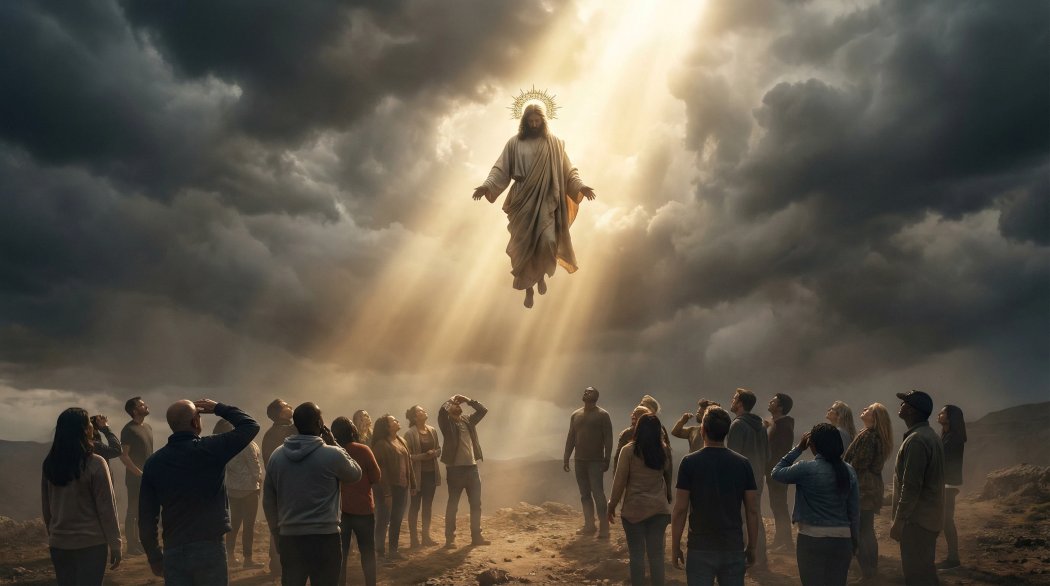
Scripture is unambiguous: when Christ returns, it will not be subtle, symbolic, or hidden. The same Jesus who came once in meekness will return in power, authority, and glory.
“For as the lightning comes from the east and shines as far as the west, so will be the coming of the Son of Man.” — Matthew 24:27
There will be no debate about who He is. No confusion about what is happening. No opportunity to ignore or dismiss Him.
The world that rejected Christ at His first coming will be forced to reckon with Him at His return.
“Behold, He is coming with the clouds, and every eye will see Him, even those who pierced Him.” — Revelation 1:7
This is where many people become uncomfortable — not because Scripture is unclear, but because it removes the illusion of neutrality. The second coming of Christ draws a definitive line. There will be no middle ground, no delayed decision, and no third option.
Jesus Himself warned that His return would bring separation:
“When the Son of Man comes in His glory… He will separate people one from another as a shepherd separates the sheep from the goats.” — Matthew 25:31–32
This is not cruelty. It is justice.
A holy God cannot ignore sin forever. Mercy is extended now, but judgment will come. Grace has a window — and Scripture tells us that window will close.
And yet — this is crucial — for those who belong to Christ, His return is not a threat.
It is hope.
The same event that brings judgment to a rebellious world brings redemption to the faithful. This is why believers throughout history have not feared Christ’s return — they have longed for it.
“So Christ, having been offered once to bear the sins of many, will appear a second time… to save those who are eagerly waiting for Him.” — Hebrews 9:28
Hope does not mean ignorance. Hope does not mean denial. Hope means confidence that God keeps His promises.
The second coming of Christ tells us that evil does not win, injustice does not endure, and suffering does not have the final word. It tells us that history is moving toward restoration, not chaos.
But it also tells us something sobering.
When Christ returns, repentance will no longer be an option.
“Seek the Lord while He may be found; call upon Him while He is near.” — Isaiah 55:6
The Jesus who once stood silently before His accusers will return as King. The Savior who was mocked, beaten, and crucified will return as Judge. And every soul will give an account.
This is why Scripture urges urgency without panic.
Not fear — but readiness. Not despair — but repentance. Not speculation — but faithfulness.
The second coming will not look like the first — and that truth is meant to awaken hearts now, while grace is still extended.
Two Eternities, No Middle Ground
This is where the message becomes impossible to soften.
There are not many paths. There is not a third option. There is not a neutral ending.
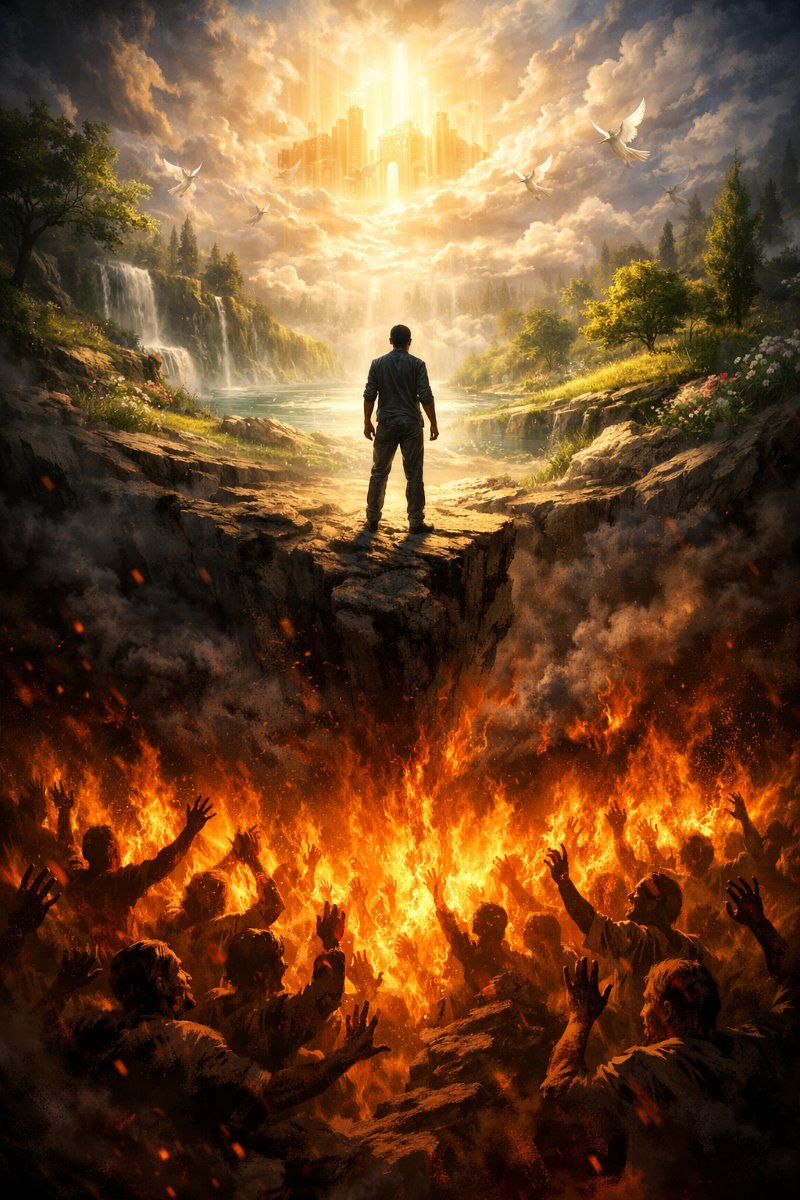
Scripture is unmistakably clear: every person will spend eternity somewhere, and there are only two destinations.
“It is appointed for man to die once, and after that comes judgment.” — Hebrews 9:27
Death is not the end. It is the doorway.
The world works hard to avoid this truth. We distract ourselves with comfort, success, entertainment, and endless noise — anything to keep from thinking about what comes after our final breath. But silence does not erase reality.
Jesus spoke more about hell than anyone else in Scripture — not because He lacked compassion, but because He loved people enough to warn them.
“Enter by the narrow gate. For the gate is wide and the way is easy that leads to destruction, and those who enter by it are many.” — Matthew 7:13
That verse doesn’t describe monsters. It describes ordinary people.
Good neighbors. Decent parents. Hard workers. Church attenders.
People who assumed there would be more time.
Salvation is not automatic. Being sincere is not enough. And good intentions do not erase guilt. Scripture never teaches that people are saved because they meant well — it teaches that people are saved because they repented and believed.
“I am the way, and the truth, and the life. No one comes to the Father except through Me.” — John 14:6
Those words are not popular. They were never meant to be.
Jesus did not leave room for interpretation here. He did not claim to be a way. He claimed to be the way. And that exclusivity is not arrogance — it is mercy. A clear door is kindness in a burning house.
There is no salvation through politics. No salvation through morality. No salvation through spiritual vague optimism.
There is salvation through Christ alone.
“And there is salvation in no one else, for there is no other name under heaven given among men by which we must be saved.” — Acts 4:12
This is not hate speech. This is rescue language.
The most dangerous lie of our time is not outright atheism — it is the belief that everything will work out in the end. That somehow a loving God will overlook sin without justice, or that sincerity will outweigh rebellion.
Scripture says otherwise.
When Christ returns, decisions will be finalized. There will be no appeals, no bargaining, and no delayed repentance. The door that is open now will close.
That truth should not produce panic — but it should destroy complacency.
If this feels uncomfortable, that discomfort has purpose. Eternal truths are not meant to sit lightly on the soul. They are meant to awaken it.
There are two eternities.
One in the presence of God. One separated from Him forever.
And the choice is not made at death — it is made now.
John the Baptist understood this truth long before the cross was ever raised.
He was not confused about where his life ended or where eternity began. When he confronted sin and spoke truth without compromise, it eventually cost him his life. Imprisoned for righteousness and silenced by those who hated truth, John did not beg for release or retreat from conviction.
Tradition records that when faced with death, his posture was not fear, but freedom — because John knew something this world refuses to acknowledge:
Death does not imprison the faithful. It releases them.
John knew that if his life was taken, he would not lose anything of value. He would gain everything. His confidence did not come from bravery, but from clarity — clarity about who God is, what truth costs, and where eternity begins.
Scripture tells us that John was not weak, reckless, or confused. Jesus Himself said of him:
“Among those born of women there has arisen no one greater than John the Baptist.” — Matthew 11:11
John’s courage was rooted in one unshakable reality: this life is not the end. When you truly believe that, fear loses its grip. Threats lose their power. And truth becomes worth dying for.
That kind of faith only makes sense when eternity is settled.
Why the Time Is Now — and Why Spiritual Preparation Comes First
If there has ever been a moment when delay is dangerous, it is now.
Not because tomorrow is guaranteed to be worse — but because tomorrow is never guaranteed at all.
Scripture does not tell us to panic, but it does tell us to wake up.
“Behold, now is the favorable time; behold, now is the day of salvation.” — 2 Corinthians 6:2
The world teaches us to prepare endlessly for everything except eternity. We insure homes, stock food, plan retirements, and build safeguards for every imaginable outcome — yet avoid the one certainty that awaits every person.
We will all take our final breath.
And when we do, no amount of preparation in this world will matter if our soul is unprepared for the next.
This is why spiritual preparedness matters more than stockpiling.
Food can run out. Power can fail. Nations can fall.
But when eternity begins, none of those things go with us.
Jesus asked a question that cuts through every distraction:
“For what will it profit a man if he gains the whole world and forfeits his soul?” — Mark 8:36
That question does not condemn — it clarifies.
Physical preparation has its place. Wisdom matters. Stewardship matters. But without reconciliation to God, preparation only delays the inevitable. It does not change it.
This is why Jesus did not come to improve our circumstances. He came to redeem our souls.
And this is why repentance is not optional.
Repentance is not shame. Repentance is not self-loathing. Repentance is the doorway to freedom.
It is the moment we stop defending ourselves and surrender to grace.
The same Christ who came once in humility still offers mercy now — but Scripture is clear that this offer is not endless.
“Seek the Lord while He may be found; call upon Him while He is near.” — Isaiah 55:6
There will come a time when the door closes. Not because God is cruel — but because justice must eventually answer rebellion.
John the Baptist understood this. The prophets understood this. The apostles understood this. And Christ Himself spoke of it plainly.
Now is the time.
Not later. Not when life slows down. Not when things feel safer.
Now.
A Call to Repentance and Salvation Through Jesus Christ
If you are reading this and feel conviction, do not push it away.
Conviction is not condemnation. It is an invitation.
Jesus Christ did not come to shame sinners — He came to save them. He lived the life we could not live, died the death we deserved, and rose again to offer forgiveness, reconciliation, and eternal life to anyone who will turn to Him.
Salvation is not earned. It is received.
Scripture makes this clear:
“If you confess with your mouth that Jesus is Lord and believe in your heart that God raised Him from the dead, you will be saved.” — Romans 10:9
If you know you are not right with God — or if you’ve drifted, compromised, or hardened your heart — you do not need to clean yourself up first.
You need to come.
Right now.
A Prayer of Repentance and Salvation
If these words reflect the posture of your heart, pray them sincerely — not as a formula, but as surrender:
Father God, I acknowledge that I am a sinner and that I cannot save myself. I have gone my own way, trusted my own understanding, and fallen short of Your truth.
I believe that You sent Your Son, Jesus Christ, to live a sinless life, to die on the cross for my sins, and to rise again in victory over death.
I repent of my sin. I turn away from my old life. I place my trust fully in Jesus as my Lord and Savior.
Forgive me. Cleanse me. Make me new.
I surrender my life to You — not partially, but completely. Lead me in truth, strengthen me by Your Spirit, and prepare my heart for eternity with You.
In Jesus’ name, Amen.
If you prayed that sincerely, Scripture says something extraordinary has happened:
“If anyone is in Christ, he is a new creation.” — 2 Corinthians 5:17
That does not mean life becomes easy. It means eternity is settled.
Why Prepared & Redeemed Exists
Prepared & Redeemed exists because there is a dangerous imbalance in the world right now.
People are preparing for everything except eternity.
We prepare for storms, shortages, retirement, illness, and uncertainty — and those things matter. Wisdom is not passive. Scripture repeatedly affirms the value of foresight, stewardship, and readiness.
But there is a preparation that matters more than all the rest.
Preparation of the soul.
Jesus never minimized hardship in this world. He acknowledged suffering, persecution, and loss openly. But He never allowed preparation for temporary trouble to replace preparation for eternal reality.
“Do not fear those who kill the body but cannot kill the soul. Rather fear Him who can destroy both soul and body in hell.” — Matthew 10:28
That verse isn’t meant to terrify — it’s meant to re-order priorities.
You can stock food and still starve spiritually. You can prepare for collapse and still be unprepared for judgment. You can survive disasters and still lose your soul.
This ministry exists to say what many avoid saying plainly:
Spiritual preparedness comes first. Always.
Physical readiness is wisdom. But salvation is essential.
The Gospel does not compete with preparedness — it completes it. Without Christ, preparation becomes fear management. With Christ, preparation becomes stewardship rooted in peace.
That is the difference.
Prepared & Redeemed is not about panic, speculation, or sensationalism. It exists to help people think clearly, live soberly, forgive deeply, and anchor their hope in Jesus Christ — especially as the world grows louder, darker, and more deceptive.
It exists because truth still matters. Because repentance still matters. Because eternity still matters.
And because delay is costly.
“Teach us to number our days that we may get a heart of wisdom.” — Psalms 90:12
Wisdom is not knowing everything that might happen. Wisdom is knowing what matters most.
This post was written because time is short — not in a frantic sense, but in a biblical one. Every breath is mercy. Every moment is an opportunity. And every soul is headed toward an eternal destination.
Prepared & Redeemed exists to point people — again and again — back to the same truth:
Jesus Christ is the only sure foundation.
Not governments. Not movements. Not culture. Not preparation itself.
Christ.
If this article has stirred conviction, brought clarity, or unsettled complacency, that is not accidental. The Word of God is living and active, and sometimes it cuts so that it can heal.
Do not waste that moment.
Respond to it.
A quiet closing word
If you’ve read this far, you weren’t here by accident.
Whether you came curious, skeptical, weary, or broken — God meets people exactly where they are, not where they pretend to be. You don’t need perfect faith. You need honest surrender.
Preparedness may help you endure hardship.
But Jesus Christ prepares you for eternity.
And that is the preparation that matters most.
A Final Invitation
If these words convict you, do not ignore them.
Jesus is calling — not tomorrow, not later, but now.
“Come to Me, all who labor and are heavy laden, and I will give you rest.” — Matthew 11:28
Turn to Him. Repent. Believe.
Eternity is real. And time is short.
About the Author
My name is Jason, and I’m not writing from a place of spiritual perfection — I’m writing as someone who understands brokenness, temptation, and the consequences of walking away from God.
This article only scratches the surface.
There was a time in my life when I fell far from the truth. I chased a lifestyle of sex, drugs, and rebellion, convinced I was free while slowly destroying myself. Looking back now, I can say honestly: I should be dead. Many people who walked the same path with me are.
But God had other plans.
While I was running, my mother was praying. While I was numbing myself, faithful family members were interceding. While I was blind to the danger, grace was already at work.
I didn’t deserve rescue. I didn’t earn mercy. And I didn’t find my way back on my own.
God’s patience, prayers offered on my behalf, and His unrelenting grace are the only reasons I’m still here. Salvation did not erase struggle overnight, but it changed my direction forever.
Prepared & Redeemed exists because of that reality. I’ve learned that spiritual preparedness must come before physical preparedness. Supplies, plans, and readiness have their place — but none of them can save a soul. Only Jesus Christ can do that.
My desire is not to spread fear or judgment, but to speak truth plainly — rooted in Scripture, centered on Christ, and motivated by love. We are living in serious times, and eternity is not something to take lightly.
If you’d like to read more about my testimony and how God brought me back from the brink, you can visit my About Me page here: Learn More About Me Here: (I’m A Sinner, Saved By Grace and Mercy)
If you’re reading this and feel far from God, know this: you are not beyond redemption. If prayers could reach me in the depths of my rebellion, they can reach you too.
2 thoughts on “The Birth of Jesus: Why Christ Came and Why It Matters Now”
Thank you for this beautiful reminder of why we celebrate Christmas. As a Christian, I celebrate this season for one reason and one reason only — Jesus. I’m so grateful that He was born, entered into our humanity, and ultimately took upon Himself my sin so that I might have eternal life. Your post captures the heart of the gospel in a way that brings fresh joy and meaning to the Christmas story.
In a world that often focuses on everything around Christmas, it’s such a gift to be refocused on who Christmas is truly about. I especially appreciated how you connected the birth of Christ to its ongoing significance in our lives today. Thank you for pointing us back to the hope, grace, and redemption we have in Him.
Leica, thank you so much for this heartfelt response. Your words truly reflect the why behind Christmas — not a season, not a tradition, but a Savior.
I love how you said He entered into our humanity. That truth alone is humbling beyond words: the King of Heaven stepping into weakness, limitation, and suffering so that we could be reconciled to God. As you beautifully shared, His birth was never just about a moment in history — it was the beginning of a rescue that still changes lives today.
You’re absolutely right that the world so easily drifts toward everything around Christmas, while missing the very reason it exists. Comments like yours are a reminder that when we keep Christ at the center, the joy, hope, and meaning never fade.
Thank you for taking the time to share your faith and encouragement here. May this season continue to deepen our gratitude for His grace — and strengthen our walk with Him, not just at Christmas, but every day.





 My name is Jason, and I’m not writing from a place of spiritual perfection — I’m writing as someone who understands brokenness, temptation, and the consequences of walking away from God.
Thank you for this beautiful reminder of why we celebrate Christmas. As a Christian, I celebrate this season for one reason and one reason only — Jesus. I’m so grateful that He was born, entered into our humanity, and ultimately took upon Himself my sin so that I might have eternal life. Your post captures the heart of the gospel in a way that brings fresh joy and meaning to the Christmas story.
In a world that often focuses on everything around Christmas, it’s such a gift to be refocused on who Christmas is truly about. I especially appreciated how you connected the birth of Christ to its ongoing significance in our lives today. Thank you for pointing us back to the hope, grace, and redemption we have in Him.
Leica, thank you so much for this heartfelt response. Your words truly reflect the why behind Christmas — not a season, not a tradition, but a Savior.
I love how you said He entered into our humanity. That truth alone is humbling beyond words: the King of Heaven stepping into weakness, limitation, and suffering so that we could be reconciled to God. As you beautifully shared, His birth was never just about a moment in history — it was the beginning of a rescue that still changes lives today.
You’re absolutely right that the world so easily drifts toward everything around Christmas, while missing the very reason it exists. Comments like yours are a reminder that when we keep Christ at the center, the joy, hope, and meaning never fade.
Thank you for taking the time to share your faith and encouragement here. May this season continue to deepen our gratitude for His grace — and strengthen our walk with Him, not just at Christmas, but every day.