
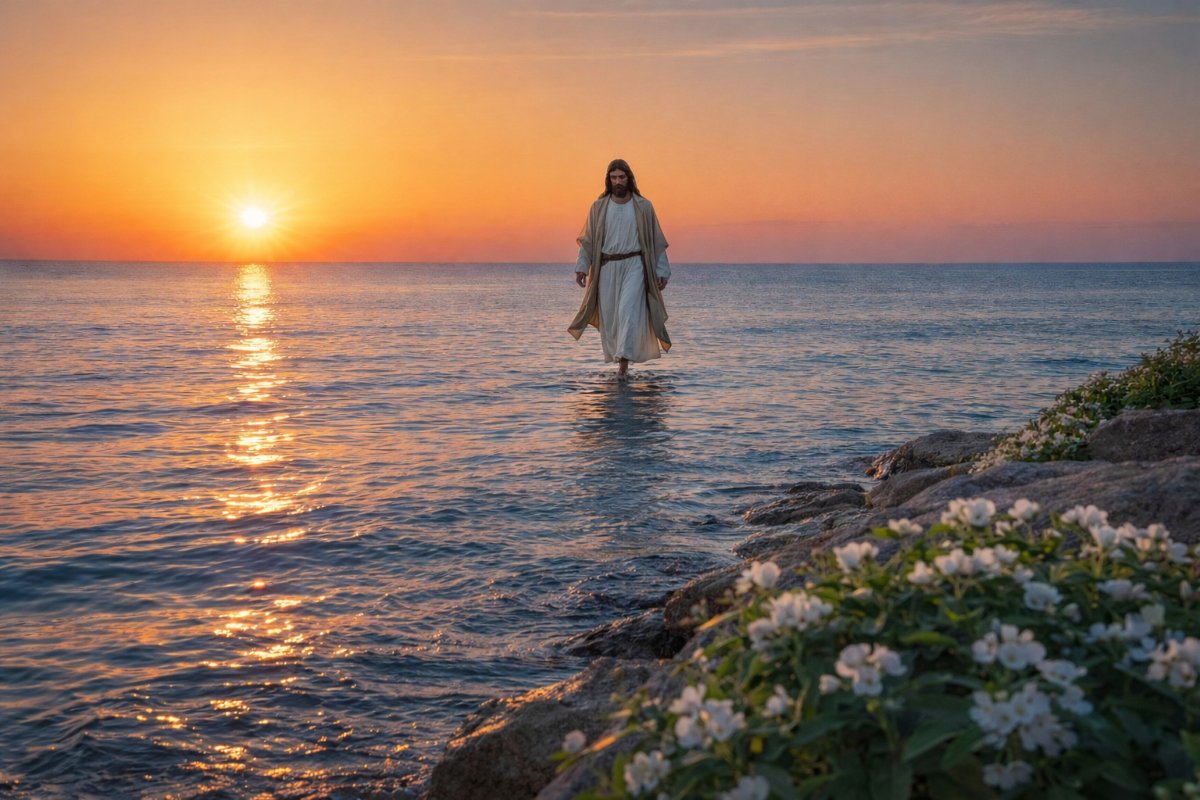
Preparation, at its best, is an act of faith.
It is wisdom applied with humility. It is stewardship offered in obedience. It is a quiet acknowledgment that life is fragile, tomorrow is uncertain, and God calls His people to be thoughtful, not careless.
But somewhere along the way, preparation can begin to change.
What once brought peace can slowly start to weigh on the soul. What began as discernment can turn into constant alertness. And what was meant to be an expression of trust in God can, without us even realizing it, drift into a subtle attempt to control outcomes that were never ours to carry.
This shift rarely happens all at once. It happens quietly, subtly, and almost imperceptibly. That is often how the enemy of our soul operates. Not through loud alarms or obvious rebellion, but through small, gradual distractions that pull our focus away from Christ and back onto ourselves.
He is crafty and deceptive, a liar by nature, content to let us keep the appearance of wisdom while slowly replacing trust in God with trust in our own understanding. The danger is not preparation itself, but when preparation becomes the place where our confidence rests. When our eyes drift from the Lord to our own ability to anticipate, manage, and control what lies ahead, peace begins to erode.
What feels like responsibility can quietly become self-reliance. And self-reliance, no matter how well-intentioned, was never meant to carry the weight of tomorrow.
A little more research. A little more scanning headlines. A little more urgency in conversations. A little less rest. A little less joy. A heart that is technically “prepared,” yet spiritually unsettled.
For those who care deeply about doing what is right, this tension can be especially strong. We want to be wise. We want to protect those entrusted to us. We want to honor God by not being naïve or unprepared. And yet, Scripture never equates faithfulness with constant inner turmoil. God does not ask His people to live in a perpetual state of alarm.
Jesus Himself spoke often about readiness, but He never separated it from peace. He warned His followers to stay awake, yet also invited them to rest. He acknowledged hardship, yet consistently redirected anxious hearts back to trust in the Father who knows our needs before we ask.
In His parable of the virgins and their lamps, Jesus emphasized readiness that flows from faithfulness and relationship, not anxious scrambling at the last moment.
This article is not written to discourage preparation. Nor is it written to minimize the very real challenges of living in uncertain times. It is written as a pause. A breath. A moment of honest reflection.
Because when preparation begins to rob us of peace, it’s worth asking a deeper question: What is my heart leaning on right now?
True readiness is not measured by how much we know, how much we’ve planned, or how much we’ve stored. It is measured by where our confidence rests when the world feels unstable. The goal was never to eliminate uncertainty, but to learn how to live faithfully within it.
Here, at Prepared & Redeemed, the order matters for a reason.
Spiritual preparation first.
Practical preparation second.
When that order is reversed, anxiety often fills the gap where trust once lived. But when Christ is kept at the center, preparation becomes what it was always meant to be: an extension of faith, not a replacement for it.
Let’s take an honest look at where that line gets crossed—and how God gently calls us back when it does.

When Wisdom Quietly Turns Into Control
There is a moment most of us don’t recognize when it happens.
It’s the point where preparation stops being something we do and starts becoming something we lean on. Where planning no longer feels like stewardship, but like a necessity for peace. Where the thought of not being prepared stirs unease rather than trust.
This is where wisdom can quietly turn into control.
Control often disguises itself as responsibility. It sounds reasonable. It feels justified. After all, isn’t it wise to anticipate problems? Isn’t it prudent to think ahead? Isn’t preparation better than regret?
The danger is not in asking those questions. The danger is when our hearts begin to answer them without God in the equation.
When preparation becomes control, it subtly shifts our posture. We stop asking, “Lord, what would You have me do today?” and start asking, “What else can I do to make sure nothing goes wrong?” The focus moves from daily obedience to future outcomes. From trust to contingency. From reliance on God to reliance on systems, plans, and foresight.
Control promises peace, but it never delivers it.
Instead, it demands more. More information. More safeguards. More readiness. And no matter how much we accumulate or anticipate, it is never enough to quiet the underlying fear. Control cannot produce rest because it was never designed to carry the weight of tomorrow.
Scripture repeatedly reminds us of this truth. We are called to be wise, yes—but not to be sovereign. Only God holds that role. When we attempt to manage outcomes that belong to Him, our souls feel the strain. Anxiety is often not a failure of faith, but a signal that we are trying to shoulder something we were never meant to carry.
This is why Jesus’ invitation remains so countercultural: “Do not worry about tomorrow.” Not because tomorrow is unimportant, but because tomorrow is not ours to control. Each day comes with enough responsibility of its own, and enough grace to meet it.
Preparation rooted in faith leaves room for God to move. Preparation rooted in control leaves no margin for rest.
The difference between the two is not found in how much we prepare, but in why we prepare—and where we place our confidence when plans fall apart.
And they always do, eventually.
This is the gentle line God invites us to examine. Not with condemnation, but with compassion. Because He knows how easily our desire to be faithful can slide into a burden we were never meant to bear.
And He is always ready to call us back to trust.
The Subtle Cost of Living on Alert
When preparation drifts into control, it rarely announces itself as anxiety. More often, it settles in as a constant state of alertness.
The mind stays busy. The heart stays tense. Even moments of rest feel interrupted by an underlying sense that something else should be checked, researched, watched, or anticipated. Silence becomes uncomfortable. Stillness feels unproductive. Peace feels fragile.
Living this way slowly reshapes the inner life.
Joy becomes harder to access, not because gratitude is absent, but because the mind is always scanning ahead. Prayer becomes shorter, more urgent, and often centered on outcomes rather than communion. Trust is still spoken about, but less frequently experienced. The soul remains faithful, yet fatigued.
This is one of the enemy’s quieter victories.
Not open rebellion. Not loss of belief. But a slow erosion of rest, where God is still acknowledged, yet no longer fully leaned on. Alertness replaces assurance. Readiness replaces relationship. And over time, the spiritual life begins to feel more like a responsibility than a refuge.
This dynamic contrasts sharply with the posture of the early believers, who lived in times of real hardship yet found a rhythm of faith, community, and peace even amid trials. Their example offers us enduring lessons for how to live faithfully without being constantly pulled into anxiety and unrest.
I reflect on this more fully in Lessons From the Early Church for End Times Living.
God never intended watchfulness to feel like strain.
Throughout Scripture, vigilance is paired with peace. Awareness is paired with assurance. Even in times of danger or uncertainty, God repeatedly anchors His people in rest. Not because circumstances are harmless, but because He is faithful.
A heart that is always on alert eventually forgets how to be still.
This is why Jesus so often withdrew from the crowds, even when the needs around Him were great. He showed that not every urgent demand is equally important, and that faithfulness requires time away with the Father. Without that rhythm of withdrawal and prayer, even good responsibility leads to exhaustion rather than renewal.
When preparation begins to cost us rest, joy, and clarity, it’s worth pausing to ask what has been displaced. Because spiritual readiness does not demand constant tension. It grows best in a posture of trust, where watchfulness is balanced by worship and vigilance is rooted in peace.
God does not call His children to live braced for impact.
He calls them to live anchored—aware of the world’s brokenness, yet secure in His presence.
Returning to a Posture of Trust

When anxiety begins to loosen its grip, it rarely happens through effort or strategy. It happens through surrender.
Not a dramatic surrender. Not a moment filled with emotion or resolve. But a quiet returning of the heart to where it was always meant to rest.
Trust is not the absence of concern. It is the decision to place concern back into God’s hands, again and again, sometimes many times a day. It is choosing to believe that faithfulness does not require constant vigilance in acquiring stuff, and that God’s care does not depend on our ability to anticipate every outcome.
Jesus continually invited weary hearts back to this posture. “Come to Me,” He said, not “figure it out.” “Abide,” not “brace yourself.” His call was never toward spiritual hyper-alertness, but toward dependence rooted in love.
This is why spiritual preparation must come before any form of practical readiness. When that order is reversed, pressure and anxiety often take its place. I explore this distinction more deeply in Why Spiritual Prepping Matters More Than Stockpiling, where the focus is not on doing less, but on placing first things first.
Returning to trust often means releasing the pressure we place on ourselves to carry what only God can carry. It means allowing unanswered questions to remain unanswered. It means accepting that obedience today matters more than certainty about tomorrow.
This does not make us careless. It makes us faithful.
When trust is restored, preparation finds its proper place again. Plans become tools instead of burdens. Awareness becomes discernment instead of anxiety. And readiness becomes an expression of love, not fear.
Peace begins to return not because the world feels safer, but because Christ feels nearer.
This is the posture God gently invites us back into, again and again. Not perfection. Not control. But trust — steady, daily, and grounded in the assurance that He is already and present in whatever tomorrow holds.
Rest there.
That is where true preparation begins.
What Preparation Looks Like When Peace Leads
When peace is restored to its proper place, preparation begins to look different.
It slows down.
It becomes less about reacting to every headline and more about responding to quiet conviction. It is no longer driven by urgency, but guided by wisdom. Decisions are made thoughtfully, not hurriedly. Actions feel purposeful, not pressured.
Preparation led by peace is steady.
It doesn’t require constant attention because it is not fueled by fear. It allows room for prayer before planning, for discernment before decision, and for rest without guilt. Instead of asking, “What else could go wrong?” the heart begins to ask, “Lord, what would You have me do today?”
That question changes everything.
When peace leads, preparation becomes an act of obedience rather than an attempt at control. It becomes a way to care for what God has entrusted to us without trying to manage what belongs to Him. There is freedom in this posture, because the weight of the future is no longer resting on our shoulders.
This is closely tied to what I’ve written in Faith Over Fear in Times of Crisis, where the focus is not on ignoring reality, but on refusing to let fear set the pace of our lives.
Preparation that flows from peace also has a natural stopping point. It knows when enough is enough. It recognizes that faithfulness is measured by daily trust, not endless readiness. And it leaves room for joy, for worship, and for the simple rhythms of life that anxiety so often crowds out.
In this way, preparation returns to what it was always meant to be: a quiet expression of stewardship, carried out with a calm heart and open hands.
Not braced for disaster, but grounded in trust.
Learning to Be Still Again

One of the first things anxiety steals is the ability to be still.
Not physically still, but inwardly quiet. The kind of stillness where thoughts are not racing ahead, where the heart is not scanning for problems, and where the soul is able to simply sit in God’s presence without feeling the need to do anything.
When preparation has been driving us for too long, stillness can feel unfamiliar. Even uncomfortable. We may find ourselves reaching for a phone, a headline, a task, or a plan the moment silence appears. Activity feels safer than rest.
But Scripture repeatedly brings us back to this invitation:
“Be still, and know that I am God.” (Psalm 46:10, NLT)
Stillness is not laziness. It is trust expressed without words.
It is the quiet confidence that God is already at work without our constant involvement. It is the decision to let the mind settle and the heart breathe, remembering that we are children before we are stewards, and worshipers before we are planners.
Learning to be still again is often the first sign that our hearts are returning to their proper place. It means we no longer feel responsible to hold everything together. It means we are remembering who actually does.
In that stillness, peace has room to return.
And when peace returns, preparation naturally falls back into its rightful place — not as a burden to carry, but as a simple act of faith lived out one day at a time.
Anchoring the Heart in God’s Word
When the mind has been running ahead for too long, the most healing thing we can do is let God’s Word bring us back to the present.
Not as a checklist. Not as a study assignment. But as a place to rest.
Jesus spoke directly to anxious hearts in a way that still feels deeply personal today. In Matthew 6, He tells His followers not to worry about the necessities of life and reminds them that their heavenly Father already knows what they need. He points to the birds and the flowers as evidence that God’s care is constant, intentional, and attentive.
The message is simple but profound: anxiety grows when we forget who is actually responsible for tomorrow.
Later in that same teaching, Jesus gently redirects the heart:
“Seek the Kingdom of God above all else… and He will give you everything you need.” (Matthew 6:33, NLT)
The solution to anxiety is not more preparation. It is reordering our focus.
Paul echoes this same truth in Philippians when he writes:
“Don’t worry about anything; instead, pray about everything… Then you will experience God’s peace, which exceeds anything we can understand.” (Philippians 4:6–7, NLT)
Notice that peace is not described as a reward for perfect planning, but as the result of bringing our concerns to God in prayer.
And Proverbs gives us the posture that holds it all together:
“Trust in the Lord with all your heart; do not depend on your own understanding.” (Proverbs 3:5, NLT)
This is where preparation often drifts. We begin depending on our own understanding instead of resting in God’s.
Scripture does not tell us to be careless. It tells us to be trusting.
When we allow God’s Word to steady our thoughts, the urgency in our minds begins to soften. The need to control gives way to the freedom to trust. And the heart slowly remembers that God’s presence in our lives is far more reliable than our ability to predict what lies ahead.
For further encouragement on fixing our eyes on Christ rather than the instability around us, I reflect more deeply on this in Hope in Troubled Times: Fixing Eyes on Christ’s Return.
This is where peace begins to take root again
An Invitation Back to Christ
By the time preparation has turned into anxiety, many hearts are simply tired.
Tired of trying to think ahead.
Tired of carrying invisible weight.
Tired of feeling responsible for things that were never ours to manage.
This is where Jesus’ invitation becomes deeply personal.
He does not call the weary to try harder. He does not ask the anxious to become more disciplined. He does not demand better plans or stronger effort. He simply says:
“Come to Me, all of you who are weary and carry heavy burdens, and I will give you rest.” (Matthew 11:28, NLT)
Rest is not something we manufacture. It is something we receive.
Coming back to Christ in moments like this often means admitting that we have been carrying more than we were meant to carry. It means acknowledging that our desire to be wise and prepared may have slowly crowded out the simple trust that once defined our faith.
And the beautiful part is this: Jesus meets us there without condemnation.
He is not surprised by our anxiety. He is not disappointed by our weariness. He is not frustrated that we tried to manage what belongs to Him. Instead, He gently invites us to lay it down and return to the place where peace is found—not in control, but in His presence.
This invitation is not only for those who already walk closely with Christ. It is also for those who have been striving on their own for far too long, unsure where to find rest.
Because true peace is not found in preparation, information, or vigilance.
It is found in a Person.
And He is still saying, “Come to Me.”
A Simple Step Toward Peace
If you’ve read this far and feel a quiet stirring in your heart, it may be because you recognize something deeper than anxiety or preparation at work.
You may be realizing that what you truly need is not better plans for tomorrow, but a restored relationship with the One who already holds tomorrow in His hands.
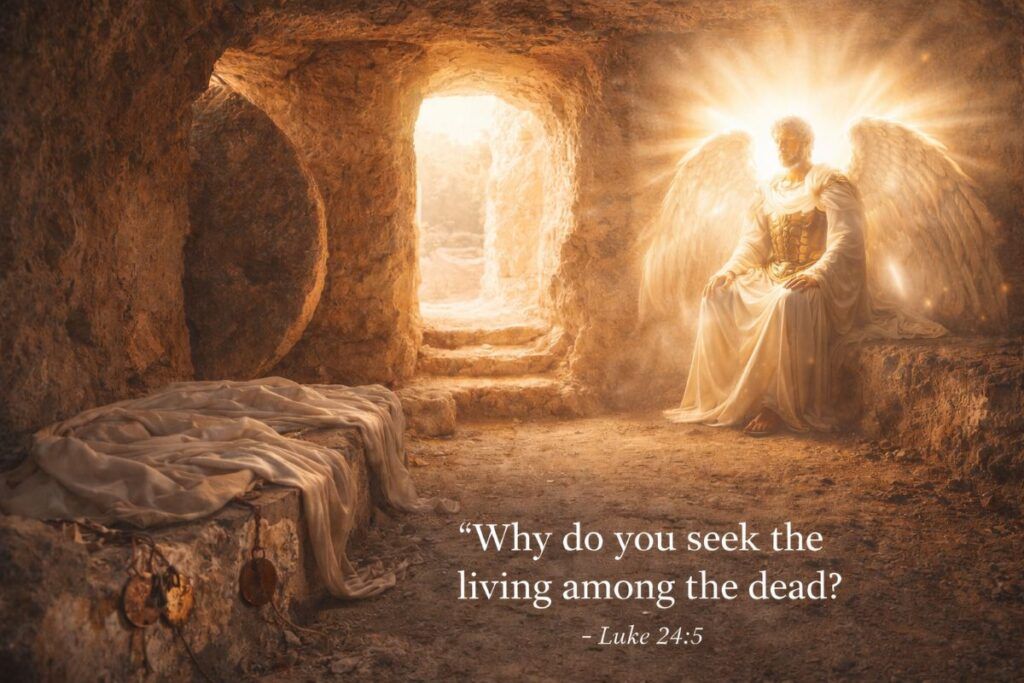
Jesus did not come to give us better strategies for life. He came to give us new life altogether.
The peace we’ve talked about throughout this article is not something we earn through discipline or wisdom. It begins when we come to Christ honestly, acknowledging our need for Him and trusting in what He has already done for us.
The Bible tells us that we have all sinned, that we cannot carry the weight of life on our own, and that Jesus stepped into our brokenness so we would not have to live separated from God. Through His death and resurrection, He made a way for us to be forgiven, restored, and brought into a relationship with Him.
If you desire that peace, you can begin right now with a simple, sincere prayer like this:
Lord Jesus, I confess that I am a sinner in need of Your grace. I believe that You died on the cross for my sins and that You rose again so that I could be forgiven and made new. I invite You into my life to be my Lord and Savior. Please forgive me, change my heart, and make me a new creation in You. Teach me to trust You and to walk in Your peace each day. Amen.
If this prayer reflects the desire of your heart, I encourage you to read How to Know Jesus, where I explain more clearly what it means to walk with Him and grow in faith.
This is where true peace begins.
About the Author

If you’re new here and wondering who writes these reflections, my name is Jason.
I am not a pastor. I am not a theologian. I am simply a sinner saved by grace.
My past is checkered, and if not for Jesus Christ stepping into my life and changing my heart, I honestly don’t know where I would be today. I may not even be here at all. Everything I share on Prepared & Redeemed flows from gratitude for what He has done in my life and a desire to point others toward the same peace I’ve found in Him.
These articles are not written from a place of authority, but from a place of humility. From someone who has wrestled with fear, control, and anxiety, and who is continually learning what it means to trust God more each day.
If you’d like to know more about my story and why this site exists, you can read more on my About Me page.
My hope is simply that something here helps you draw closer to Christ and find rest in Him.
Resting Where Preparation Cannot Reach
At the end of all our planning, thinking, watching, and preparing, there is a place where preparation simply cannot go.
It cannot quiet the heart.
It cannot guarantee tomorrow.
It cannot carry the weight of uncertainty.
Only Christ can do that.
When our hearts return to Him, preparation regains its proper place. It becomes something we do wisely, not something we cling to for peace. It becomes an expression of stewardship rather than a substitute for trust.
If you’ve felt the tension described in this article, you’re not alone. Many of us have walked this quiet road where responsibility slowly turns into restlessness. The good news is that God gently calls us back, not with correction, but with invitation.
Back to trust.
Back to stillness.
Back to peace.
If this reflection encouraged you, you may also find help in Spiritual Readiness for the End Times, where the focus is once again on keeping Christ at the center of our preparedness.
I’d love to hear from you in the comments. Have you ever felt preparation begin to steal your peace? What helped you return to a posture of trust?
Let’s encourage one another to keep first things first.
Spiritual preparation first. Practical preparation second.
Affiliate Disclosure
Prepared & Redeemed is a reader-supported ministry. While we never ask for donations, some articles may include trusted affiliate links from partners we have personally researched and tested.
If you choose to make a purchase through one of these links, it comes at no extra cost to you. A small commission may be earned, which helps support this ministry and allows us to continue creating faith-centered content.
We only recommend products and resources we believe are genuinely helpful and aligned with the mission of spiritual preparation first and practical preparation second.
Reading this post felt like looking into a mirror of my past. There was a time when my life was defined by hyper-vigilance—a “preparation” that was actually just a symptom of PTSD. I lived in a constant state of “defensive living,” trying to out-calculate every possible trauma before it could happen. It’s exhausting to realize that you’ve turned your life into a fortress, only to find you’ve locked yourself in with your own fear. But I can testify that God used the wisdom of His Word and the quiet power of His parables to lead me out of that dark valley.
Leah, thank you so much for sharing this. What you described is incredibly honest, and I know it will resonate with more people than you realize.
That line about turning life into a fortress and realizing you’ve locked yourself in with your own fear… that’s powerful. And sadly, it’s a place many people drift into without noticing when preparation quietly turns into anxiety.
I’m really grateful you shared how God used His Word to lead you out of that valley. That’s the heart of this message, preparation should flow from peace and faith, not fear and hyper-vigilance.
Your testimony adds a depth to this conversation that I could never write on my own. Thank you for the courage to say it out loud.