
Electric bikes have become a practical option for commuting, recreation, and even emergency transportation. HappyRun is one brand worth a closer look, offering everything from affordable fat-tire bikes to powerful dual-motor models designed for more demanding rides.
But attractive specifications and competitive pricing don’t tell the whole story. I wanted to look beyond the advertising and examine HappyRun’s bikes, company reputation, customer experiences, and warranty policies to see what buyers can realistically expect.
In this review, I’ll cover six HappyRun models, explain where the company stands out, and discuss the potential drawbacks worth knowing before making a purchase.
Quick Verdict: Is HappyRun Worth Considering?
My Verdict: HappyRun is worth considering for riders looking for a feature-rich electric bike without spending premium-brand prices. Its growing lineup includes commuter, cargo, and high-performance models, giving buyers several options depending on their needs.
I like the variety, competitive pricing, and availability of replacement parts. Customer feedback is generally favorable, although some owners report mechanical problems, shipping frustrations, and difficulties resolving warranty claims. Those concerns deserve attention, but they don’t represent every customer’s experience.
Bottom line: HappyRun offers promising value, particularly for everyday transportation and recreational riding. I would pay close attention to the specific model, its intended use, and the warranty terms before purchasing.
Affiliate Disclosure: Prepared & Redeemed partners with HappyRun. I may earn a commission from qualifying purchases at no additional cost to you. This does not influence my independent assessment.
Who Is HappyRun? Company Background and Reputation
HappyRun is an electric bike brand established in 2019, with roots in a scooter business that began in 2016. According to the company’s history, founders Kandy and Tank entered the electric bike market with the G50, eventually expanding into fat-tire bikes, cargo models, and powerful electric dirt bikes.
What interests me about HappyRun is how much its lineup has evolved. Rather than concentrating on one type of rider, the company now offers bikes for commuting, recreational riding, carrying cargo, and more demanding off-road adventures.
HappyRun also has a physical presence in California, including a flagship location in Orange, and advertises a growing network of dealers and service providers. That’s encouraging for a brand competing in the crowded direct-to-consumer electric bike market.
Still, an expanding product lineup doesn’t automatically establish long-term reliability. Customer support, replacement parts, and how a company handles problems after the sale matter just as much as the specifications on its website. I’ll examine those areas more closely throughout this review.
HappyRun Tank G60 – Affordable Fat-Tire Electric Bike
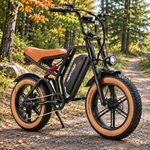
The HappyRun Tank G60 is an affordable entry into the company’s fat-tire lineup. It features a 500W motor (1,500W peak), a removable 48V 13Ah battery, and a top speed of 20 mph. HappyRun advertises up to 68 miles of range with pedal assistance.
For the price, I like that the G60 includes full suspension, hydraulic disc brakes, and 20 × 4-inch tires. It also supports a maximum load of 330 pounds, making it a practical option for commuting, recreational riding, and everyday transportation.
The G60’s electrical system is UL 2849 certified, an important safety consideration. My main reservation is its 83-pound weight, which makes transporting or storing the bike less convenient.
Best for: Budget-conscious riders who want a comfortable fat-tire electric bike for everyday transportation and recreation.
HappyRun Tank G60 Pro – Upgraded Fat-Tire Electric Bike
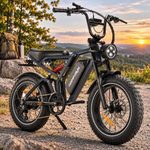
The HappyRun Tank G60 Pro builds on the standard G60 with a stronger 750W motor (2,000W peak), a larger 48V 18.2Ah removable battery, and an advertised range of over 70 miles. The current UL 2849-certified version has a top speed of 20 mph.
I like the upgrades, particularly the adjustable front suspension, hydraulic disc brakes, and NFC security system. Combined with full suspension and 20 × 4-inch fat tires, the G60 Pro offers a solid combination of comfort and everyday versatility.
At 93 pounds, however, it’s a heavy bike, and riders should consider whether the additional features justify the higher cost compared with the standard G60.
Best for: Riders who want more battery capacity, improved features, and a comfortable electric bike for commuting and recreational use.
HappyRun Tank G70 – Dual-Battery Electric Cargo Bike
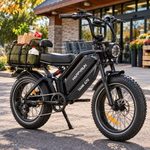
The HappyRun Tank G70 is designed for riders who need more than basic transportation. Its 750W motor (2,000W peak), dual 48V 13Ah batteries, and advertised range of up to 85 miles make it an interesting option for commuting, running errands, and carrying additional supplies.
What stands out to me is its versatility. The G70 features full suspension, hydraulic disc brakes, 20 × 4-inch fat tires, and a 330-pound total payload capacity. The rear passenger seat can also be replaced with a cargo rack, making it useful for groceries, equipment, or emergency supplies.
The current UL 2849-certified model has a top speed of 20 mph. At 98 pounds, however, this is a substantial bike, and its weight is worth considering if storage or transportation space is limited.
Best for: Riders who want extended battery capacity and practical cargo-carrying capability for everyday use or emergency preparedness.
HappyRun Tank G70 Pro – Dual-Motor Electric Cargo Bike
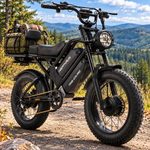
The HappyRun Tank G70 Pro takes the standard G70 a step further with dual motors producing a combined 5,000W peak output. It features two removable batteries totaling 48V 33Ah, an advertised range of up to 85 miles, and a top speed of 36 mph.
What impresses me is the combination of power and utility. The G70 Pro includes full suspension, hydraulic disc brakes, 20 × 4-inch fat tires, and a 330-pound payload capacity. Its removable rear passenger seat can also be replaced with a cargo rack for carrying groceries or emergency supplies.
There are trade-offs. At 101 pounds, it’s heavy, and its advertised 36 mph top speed exceeds standard U.S. electric bicycle classifications. Buyers should check local regulations before considering it for public roads.
Best for: Experienced riders who need substantial power, cargo versatility, and a capable electric bike for appropriate off-road use.
HappyRun G100 Pro – High-Performance Electric Bike
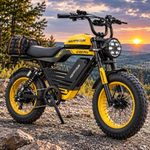
The HappyRun G100 Pro is built for riders who want serious performance. It features a motor producing up to 6,000W peak power, dual removable 72V batteries totaling 33Ah, and an advertised top speed of 50 mph with up to 78 miles of range.
What stands out to me is the combination of power and equipment. The G100 Pro includes full suspension, hydraulic disc brakes, NFC unlocking, and 20 × 4-inch tires. Its 400-pound total payload rating is another impressive specification.
However, at 159 pounds, this is a substantial machine. With a potential top speed of 50 mph, it falls outside standard U.S. electric bicycle classifications and shouldn’t be treated as an ordinary street-legal e-bike. Buyers need to understand applicable riding restrictions before purchasing.
Best for: Experienced riders seeking motorcycle-like electric performance for appropriate private-property or designated off-road use.
HappyRun G300 Pro – High-Performance Electric Dirt Bike
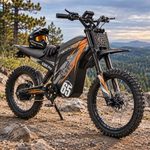
The HappyRun G300 Pro is built for off-road enthusiasts who want serious power without a gasoline engine. It features a 3,000W motor (6,500W peak), a removable 72V 30Ah battery, and an advertised top speed of 50 mph with up to 70 miles of range.
What I like about the G300 Pro is its purpose-built design. It includes full suspension, hydraulic disc brakes, a 19-inch front wheel, and a 17-inch rear wheel for handling rough terrain. Its 350-pound payload rating is impressive, although the bike itself weighs nearly 137 pounds.
The biggest consideration is where you can legally ride it. Despite having a lower-speed riding mode, the G300 Pro is an electric dirt bike, not a conventional street-legal e-bike. Riders should verify local restrictions and choose appropriate off-road riding areas.
Best for: Experienced off-road riders looking for powerful electric dirt bike performance without a gasoline engine.
Motor Performance, Battery Range, and Build Quality
HappyRun offers a wide range of performance levels, from everyday commuter bikes to powerful off-road machines. I appreciate that variety because not every rider needs the fastest or most expensive model.
For commuting and recreational riding, the G60 and G60 Pro provide more manageable performance. The G70 models add cargo versatility, while the G100 Pro and G300 Pro are better suited to experienced riders looking for substantially more power.
Battery range is another consideration. HappyRun advertises impressive distances across its lineup, but these are manufacturer estimates, not guaranteed real-world results. Rider weight, terrain, speed, weather, and throttle use can all affect how far a bike travels on a charge.
Build quality is encouraging on paper. HappyRun uses steel frames, fat tires, suspension systems, and hydraulic brakes across much of its lineup. However, these features alone don’t establish long-term durability, and I would like to see more independent evidence of how the bikes hold up after extended use.
One positive is that HappyRun sells replacement components, including motors and controllers, directly through its website. That’s useful for owners who intend to maintain their bikes rather than replace them when something goes wrong.
Are HappyRun Electric Bikes Useful for Emergency Preparedness?
One reason I pay attention to electric bikes is their potential usefulness when gasoline becomes difficult to obtain. During a prolonged fuel shortage or transportation disruption, having another way to get around could make a real difference.
HappyRun’s commuter and cargo models offer some practical possibilities. The G70 and G70 Pro are particularly interesting because their cargo-carrying capabilities could help with transporting groceries, emergency supplies, or other necessities.
But electric bikes have limitations. They still depend on electricity, and recharging during an extended power outage requires planning. A compatible portable power station or properly sized solar charging setup could help, but charging requirements and available capacity need to be considered beforehand.
I’ve covered backup power options in my Jackery Solar Generator Review. Readers comparing different systems can also explore my Solar Power & Generators storefront.
For a broader look at alternative transportation during fuel shortages and emergencies, read my guide to Emergency Transportation Without Gas.
I don’t consider an electric bike a replacement for every vehicle or emergency plan. But for families looking to build practical transportation alternatives, a suitable HappyRun model could be one useful part of their preparedness strategy.
What Real HappyRun Owners Are Saying
Customer feedback gives us a better picture of HappyRun beyond the specifications and promotional claims. After reviewing independent feedback on Trustpilot and the Better Business Bureau, I found plenty of satisfied owners alongside some legitimate concerns.
HappyRun currently holds a 4.2 out of 5 rating on Trustpilot, with approximately 245 reviews. Many customers praise their bikes’ power, comfortable riding experience, and value for the money. Positive reviews also describe responsive customer support and replacement parts being supplied under warranty.
The concerns deserve attention, too. Some owners report mechanical failures, shipping problems, and frustrating warranty experiences. The BBB currently assigns HappyRun an F business rating, primarily citing unanswered complaints, even though its individual customer-review average is considerably more favorable.
That contrast is worth understanding. HappyRun clearly has customers who enjoy their bikes and appreciate the support they’ve received. Others have experienced problems that were difficult to resolve.
My takeaway: I wouldn’t dismiss HappyRun based on negative reviews alone, but I also wouldn’t ignore its complaint history. Buyers should consider both the positive ownership experiences and the company’s record of handling problems after the sale.
HappyRun Warranty, Returns, and Customer Service
HappyRun advertises a two-year warranty, but that coverage applies specifically to the bike’s frame. Motors, batteries, controllers, and chargers receive 12 months of coverage, while other components have shorter warranty periods.
I appreciate that HappyRun provides replacement parts and troubleshooting support. However, normal wear, accidental damage, unauthorized modifications, and certain water-related failures are excluded. Customers may also be responsible for installation labor and replacement-part shipping costs.
The return policy deserves particular attention. HappyRun generally allows returns within 14 days of delivery. For non-defective bikes, customers can face a $150 return shipping fee, plus processing or restocking charges depending on the bike’s condition. Defective bikes may qualify for a full refund or replacement under the company’s stated conditions.
Shipping is free to the contiguous United States, and HappyRun provides email and telephone support. While these policies offer some reassurance, the mixed customer-service experiences discussed earlier make it especially important to understand the terms before ordering.
I recommend reviewing HappyRun’s official warranty policy and return and refund policy before making a purchase.
HappyRun vs. Kingbull, Mooncool, and Burchda
HappyRun isn’t the only electric bike brand worth considering. I also partner with Kingbull, Mooncool, and Burchda, and each offers something different depending on how you plan to ride.
Kingbull focuses on fat-tire electric bikes for commuting, recreation, and off-road adventures. Its lineup includes practical cargo and folding models. I’ve covered the company in my Kingbull Electric Bikes Review.
Mooncool is particularly interesting for its electric trikes. Three-wheel designs can appeal to riders who prefer a different balance and carrying arrangement, although they handle differently from traditional bicycles.
Burchda offers fat-tire electric bikes, including folding and all-terrain designs that may appeal to riders looking for recreational versatility.
HappyRun stands out for the breadth of its lineup, especially its combination of everyday fat-tire bikes, dual-battery cargo models, and high-performance electric dirt bikes.
I wouldn’t call any one of these brands the best for everyone. The right choice depends on your intended use, budget, riding experience, and the support available after purchase.
HappyRun Electric Bikes: Pros and Cons
After looking at HappyRun’s lineup, specifications, customer feedback, and company policies, here’s where I believe the brand stands.
What I Like
- Wide selection of commuter, cargo, and high-performance electric bikes.
- Competitive pricing for the features offered.
- Dual-battery options on select models.
- Hydraulic brakes and suspension systems across much of the lineup.
- Replacement parts available directly from HappyRun.
- Positive feedback from many satisfied owners.
Where HappyRun Could Improve
- Heavy bike designs can make storage and transportation difficult.
- Customer-service and warranty experiences are inconsistent.
- Return fees and warranty exclusions deserve careful attention.
- Some high-performance models face significant public-road restrictions.
- More independent long-term reliability testing would be helpful.
Who Should Buy a HappyRun Electric Bike?
I think HappyRun makes the most sense for riders who want substantial features at a competitive price and are comfortable owning a heavier electric bike.
The G60 and G60 Pro are worth considering for everyday commuting and recreation, while the G70 models offer more flexibility for carrying supplies or handling longer trips. Experienced riders interested in high-powered off-road machines may find the G100 Pro and G300 Pro appealing.
For practical preparedness, I particularly like the idea of a cargo-capable electric bike that can handle errands and transportation when gasoline isn’t readily available.
However, HappyRun may not be the best fit for someone who needs a lightweight bike, extensive local dealer support, or a simple return process. Riders considering the faster models should also understand where those bikes can legally be operated.
Ultimately, I would choose based on how the bike will actually be used rather than buying the most powerful model available.
Final Verdict: Are HappyRun Electric Bikes Worth Buying?
After examining HappyRun’s electric bike lineup, company background, customer experiences, and purchasing policies, I believe the brand deserves consideration.
HappyRun offers an appealing combination of performance, practical features, and competitive pricing. I particularly appreciate its range of options, from everyday commuter bikes to cargo-capable models that could serve a useful role in emergency preparedness.
That doesn’t mean every HappyRun bike is right for every rider. The company’s mixed customer-service record, warranty limitations, and the weight of many models are legitimate considerations. Buyers should also understand the legal restrictions surrounding its higher-powered bikes.
My final assessment: HappyRun offers good potential value for riders who understand what they’re buying and choose a model that fits their needs. I wouldn’t hesitate to include the brand among the options worth researching, but I recommend comparing models carefully and reviewing the warranty before purchasing.
If you’re considering a HappyRun electric bike, explore the company’s current lineup, compare the available models, and decide which one best suits your everyday transportation and preparedness needs.
About the Author

I’m Jason, founder of Prepared & Redeemed, where I share honest product reviews, practical preparedness resources, and faith-centered encouragement. My mission is simple: eternal preparedness first, worldly preparedness second.
I research the products and companies I feature, examining their specifications, customer experiences, and policies to help readers make informed decisions. I believe preparedness should be guided by wisdom, responsible stewardship, and faith rather than fear.
Affiliate & AI Image Disclosure
Affiliate Disclosure: Prepared & Redeemed participates in affiliate programs, including HappyRun. If you purchase through certain links in this article, I may earn a commission at no additional cost to you. Affiliate relationships do not influence my reviews or recommendations.
AI Image Disclosure: Some product images in this article are AI-generated illustrations based on manufacturer references. They are used for visual purposes only and may not accurately represent every detail of the actual products. For exact product appearance and specifications, please visit the manufacturer’s website.